







What's Happening?
A fisherman, David Slavich, experienced a close encounter with a great white shark while kayaking off the coast of San Mateo County, California. The incident occurred on a Sunday afternoon as Slavich was fishing in the Pacific. While filming his fishing reel,
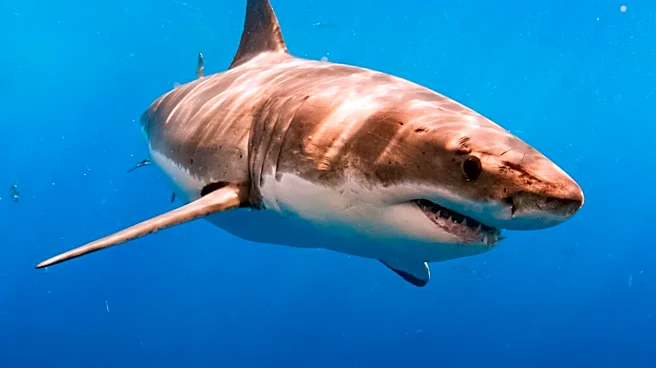
he noticed the apex predator swimming inches away from his kayak. The shark's dorsal fin was visible above the water as it passed by. Slavich quickly reeled in his fishing line, expressing surprise and awe. According to Slavich, he felt more fascination than fear during the encounter, describing it as an unforgettable experience. Scientists, including those from the California Department of Fish and Wildlife, suggest that most human-shark incidents are not predatory but rather exploratory bites from sharks investigating unfamiliar objects like kayaks.
Why It's Important?
This incident highlights the potential for unexpected wildlife interactions for individuals engaging in recreational activities like kayaking in coastal waters. While Slavich reported feeling awe rather than fear, such encounters can pose risks and raise awareness about marine life presence in popular recreational areas. For kayakers and other water sports enthusiasts, understanding the behavior of marine animals, particularly large predators like great white sharks, is crucial for safety. The California Department of Fish and Wildlife's explanation that these are often exploratory bites rather than predatory attacks can help inform public perception and reduce undue panic, emphasizing the importance of coexisting with marine ecosystems. This event also underscores the natural habitat of great white sharks, which migrate seasonally along coastlines.
What's Next?
While no specific actions are mandated following this individual encounter, it serves as a reminder for coastal communities and recreational users to remain vigilant and informed about marine wildlife. Local authorities and wildlife organizations may continue to issue advisories or educational materials regarding shark activity, especially during peak migration seasons or in areas known for shark presence. Kayakers and fishermen are likely to continue exercising caution, potentially reviewing safety guidelines for encounters with large marine animals. The incident may also contribute to ongoing research and public education efforts by organizations like NOAA Fisheries and the California Department of Fish and Wildlife regarding great white shark behavior and their interactions with humans.
Beyond the Headlines
The encounter between David Slavich and the great white shark touches upon the broader theme of human interaction with wild nature. It challenges common perceptions of fear associated with sharks, as Slavich's reaction was primarily one of awe and fascination. This perspective can foster a greater appreciation for marine ecosystems and the creatures within them, moving beyond sensationalized narratives. Ethically, it prompts reflection on how humans can responsibly share natural spaces with wildlife, minimizing disturbance and understanding natural behaviors. Culturally, such stories contribute to the ongoing narrative of the wildness of the ocean and the unpredictable beauty of its inhabitants, reinforcing the idea that humans are visitors in these environments.