

What's Happening?
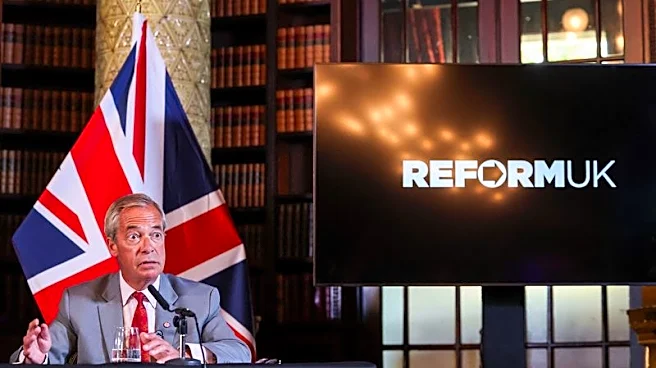
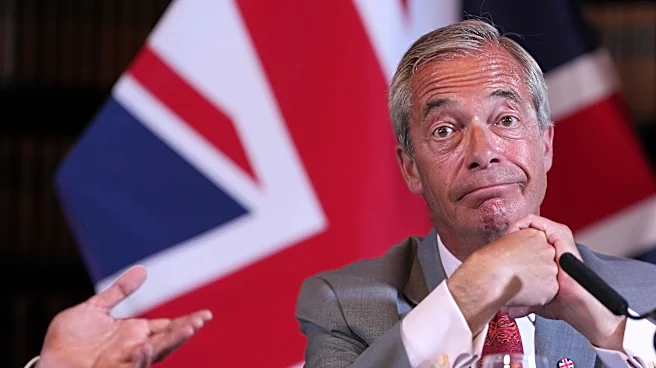
Nigel Farage, leader of the Reform UK party, is participating in a special election for his Parliament seat in Clacton, a seaside resort outside London. This election, triggered by Farage's resignation, is seen as an attempt to address questions about
his finances. However, major political parties have opted out, leaving Farage to compete against a variety of unconventional candidates, including Count Binface, a satirical figure. The election features a record 34 candidates, and voter turnout is expected to be low due to the timing during summer holidays and a heatwave. Farage's financial dealings, particularly a $6.7 million donation from a cryptocurrency billionaire, are under scrutiny by Parliament's standards watchdog. If re-elected, the investigation into his finances will resume.
Why It's Important?
The election is significant as it highlights ongoing concerns about political transparency and accountability in the UK. Farage's financial scrutiny underscores the challenges political figures face regarding campaign finance and personal donations. The absence of major parties in the election could set a precedent for how political stunts are perceived and handled in future elections. Additionally, the presence of satirical candidates like Count Binface reflects the public's growing disillusionment with traditional political processes and figures. The outcome could influence Farage's political future and impact the Reform UK party's standing.
What's Next?
If Farage wins, the parliamentary investigation into his finances will continue, potentially leading to further political and legal challenges. A breach of Parliament's rules could result in a recall petition, possibly triggering another special election. This scenario could impose additional financial burdens on taxpayers and further complicate Farage's political career. The election's outcome may also prompt other political parties to reconsider their strategies in dealing with similar situations in the future.
Beyond the Headlines
The election raises questions about the role of satire in politics and its effectiveness in engaging the electorate. Candidates like Count Binface challenge the seriousness of political discourse, potentially influencing voter perceptions and participation. The situation also highlights the complexities of political finance regulations and the need for clearer guidelines to prevent misuse of funds. The broader implications for political accountability and public trust in democratic institutions are significant, as they may affect voter engagement and confidence in the electoral process.