



What's Happening?
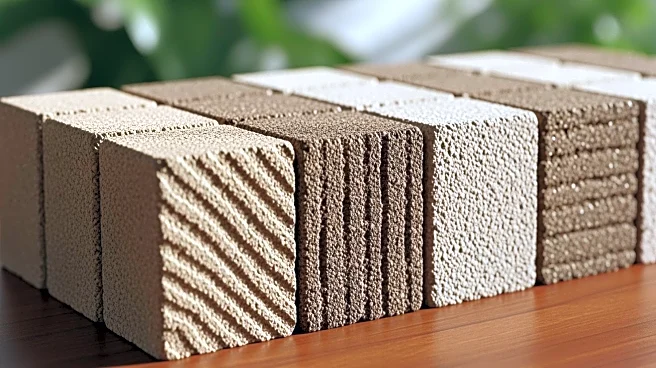
The Technology Development Board (TDB) of India's Department of Science & Technology has partnered with Carbon Craft Design Pvt. Ltd. to commercialize eco-friendly, ultra-low carbon footprint wall claddings. This initiative aims to establish a manufacturing
facility for geopolymer-based tiles using indigenous technology. CarbonCraft, a startup focused on sustainable building materials, utilizes construction and demolition waste along with industrial byproducts to create durable architectural materials. Their technology sequesters industrial waste into products like tiles and bricks, significantly reducing carbon emissions by eliminating the need for energy-intensive kiln firing processes. This project aligns with India's goals for sustainable construction and circular economy practices, aiming to reduce the carbon footprint of building materials.
Why It's Important?
This initiative is crucial for advancing India's climate goals and net-zero ambitions. The construction sector is a major contributor to material-related carbon emissions, and innovations in sustainable materials are essential for reducing this impact. By supporting CarbonCraft, TDB is promoting the commercialization of technologies that lower carbon footprints and encourage waste valorization. This project not only supports environmental sustainability but also enhances India's green manufacturing ecosystem. It aims to reduce reliance on imported cladding products, promote industrial waste reuse, and strengthen the circular economy. As global demand for green-certified buildings increases, this initiative positions India as a leader in sustainable architectural innovation.
What's Next?
The proposed facility will scale up domestic production of specialized cladding materials, reducing dependency on imports and promoting local innovation. TDB's financial support will help CarbonCraft expand its manufacturing capabilities and market access for sustainable building solutions. This aligns with the principles of Aatmanirbhar Bharat, emphasizing self-reliance and indigenous innovation. As the project progresses, it is expected to contribute significantly to India's circular economy and green building goals, potentially influencing policy and industry standards in sustainable construction.
Beyond the Headlines
The project highlights the importance of indigenous innovation in achieving environmental sustainability. By leveraging geopolymer chemistry and waste-derived materials, the initiative not only addresses climate change but also offers cost-efficient solutions for the construction industry. This approach could serve as a model for other countries seeking to balance economic growth with environmental responsibility. Additionally, the focus on reducing carbon emissions in building materials could lead to broader adoption of similar technologies globally, further advancing the circular economy and sustainable development goals.