



What's Happening?
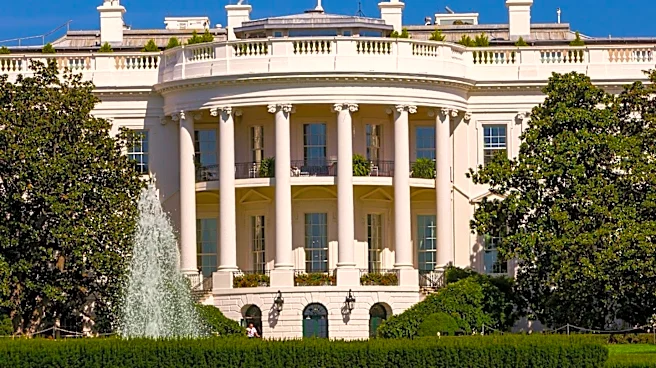
The White House has issued a new executive order titled “Enhancing Program Integrity and Interagency Coordination in the Administration of the H-1B Nonimmigrant Visa Program.” This order aims to reduce abuses within the H-1B program, strengthen oversight,
and improve coordination among federal agencies involved in its administration. A key provision of the order requires agencies reviewing H-1B applications to consider whether the employer sponsoring a petition has recently laid off U.S. workers in similar job roles. This measure is part of a broader effort by the administration to address concerns regarding the H-1B visa program. The White House also renewed a $100,000 H-1B fee requirement, though this fee is currently blocked due to legal challenges.
Why It's Important?
This executive order signifies a significant shift in the U.S. government's approach to the H-1B visa program, which is critical for many U.S. technology companies and other industries that rely on skilled foreign workers. By mandating consideration of U.S. worker layoffs, the order aims to protect American jobs and ensure that the H-1B program is not used to displace domestic talent. This could impact the hiring strategies of companies that frequently utilize H-1B visas, potentially leading to more stringent application processes and increased scrutiny. For H-1B visa holders and prospective applicants, the order introduces new complexities and uncertainties, as agencies will be developing new guidance and regulations for its implementation. The measure reflects ongoing debates about immigration policy and its impact on the U.S. labor market.
What's Next?
Federal agencies responsible for reviewing H-1B applications are expected to issue new guidance and regulations in the coming weeks and months to implement this executive order. This process will clarify how the requirement to consider U.S. worker layoffs will be applied in practice. International Services offices, such as those at Cornell, will be closely monitoring these developments and communicating directly with H-1B visa holders about any immediate impacts. While the order does not immediately change the H-1B program or filing process, nor does it automatically deny petitions after employer layoffs or alter annual H-1B cap numbers, it signals a future direction towards increased scrutiny and potentially more restrictive conditions for H-1B sponsorships. Stakeholders, including businesses and visa applicants, will need to stay informed about these evolving guidelines.
Beyond the Headlines
The executive order on H-1B visas delves into the complex intersection of immigration policy, economic protectionism, and the global competition for talent. While ostensibly aimed at preventing abuse and protecting U.S. workers, such measures can have broader implications for the U.S. as a hub for innovation and a destination for highly skilled professionals. The increased oversight could deter some international talent from seeking opportunities in the U.S., potentially impacting the competitiveness of American industries. Furthermore, the order highlights the ongoing tension between the need for specialized skills that may not be readily available domestically and the imperative to safeguard the interests of the U.S. workforce. The legal challenges surrounding the renewed H-1B fee also underscore the contentious nature of these policy changes and their potential for prolonged legal battles.