







What's Happening?
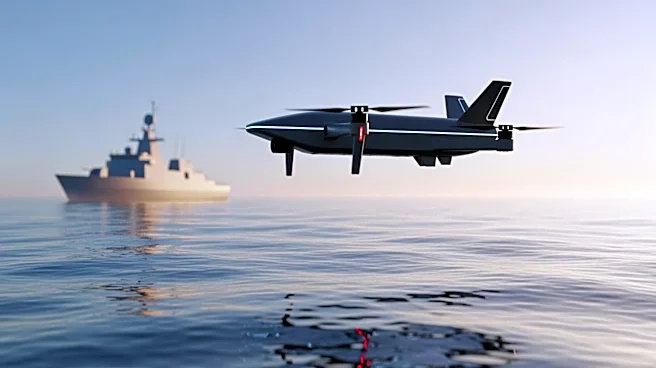
UAV Navigation-Grupo Oesía has successfully showcased its autonomous control system during maritime exercises conducted by US Special Forces in Cartagena, Spain. The exercises featured the NEWT21 Fiber Optic Gyroscope-based Unmanned Surface Vehicle (USV),
which integrated UAV Navigation-Grupo Oesía’s advanced autopilot system. This system provides guidance and navigation capabilities, executing a fully autonomous navigation plan in a high-demand multi-domain operational environment. The technology demonstrated stable behavior, precise route tracking, and resilience under operational constraints. The control system includes advanced functions for challenging environments, such as dynamic relative routing and collision-avoidance protocols for mothership approaches. It is designed as a fault-tolerant system with integrated health-monitoring functions to ensure operational continuity and safety.
Why It's Important?
The successful demonstration of UAV Navigation-Grupo Oesía’s autonomous control system in maritime exercises highlights the growing importance of unmanned systems in enhancing operational capabilities while minimizing risks to personnel. This technology is crucial for maritime security, surveillance, and reconnaissance missions, providing reliable and resilient solutions in complex environments. The collaboration between UAV Navigation-Grupo Oesía and NEWT21 underscores the role of integrated autonomous systems in advancing defense capabilities. As international defense partners and allies seek to improve their operational effectiveness, such autonomous systems offer significant advantages in terms of safety, efficiency, and mission success.
What's Next?
UAV Navigation-Grupo Oesía is committed to continuing its development of resilient, field-proven autonomous navigation solutions for international defense partners. The success of the maritime exercises may lead to further collaborations and deployments of this technology in various defense and security missions. As the demand for advanced unmanned systems grows, UAV Navigation-Grupo Oesía is likely to expand its partnerships and explore new applications for its autonomous control systems. Future exercises and deployments will test the system’s capabilities in different environments, potentially leading to enhancements and innovations in autonomous navigation technology.
Beyond the Headlines
The integration of autonomous systems in defense operations raises important ethical and legal considerations. As these technologies become more prevalent, questions about accountability, decision-making, and the role of human oversight in autonomous missions will need to be addressed. Additionally, the development and deployment of such systems may influence international defense policies and strategies, as countries seek to balance technological advancements with security and ethical concerns. The long-term impact of autonomous systems on military operations and international relations could be significant, shaping the future of defense and security.