





What's Happening?
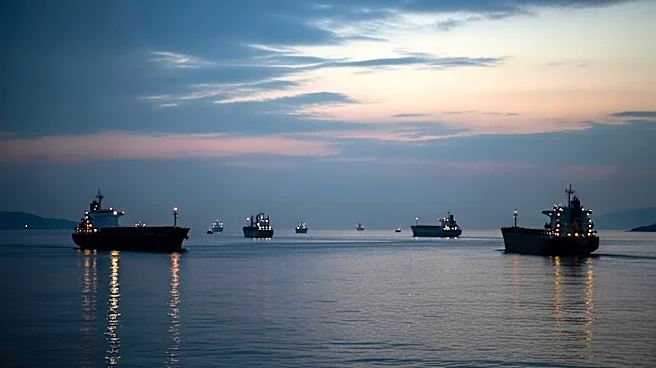
The Eastern Outer Port Limits (EOPL) off the coast of Malaysia has become a strategic location for Iran's shadow fleet to conduct oil transfers. This area, located near the Singapore Strait, is used by Iran to maintain its oil exports despite ongoing
conflicts and sanctions. The MT Tifani, an oil tanker, was recently seized by U.S. forces while carrying 1.9 million barrels of Iranian oil. The EOPL serves as a floating gas station where ship-to-ship transfers occur, allowing Iran to continue exporting oil, primarily to China. These activities are part of a broader strategy to circumvent international sanctions and sustain the Iranian economy during the war.
Why It's Important?
The use of the EOPL by Iran's shadow fleet highlights the challenges in enforcing international sanctions and the complexities of global oil trade. By maintaining oil exports through this area, Iran can generate significant revenue, which is crucial for its economy amidst international isolation. This situation underscores the geopolitical tensions in the region and the strategic importance of maritime routes. The ongoing activities in the EOPL also reflect the broader implications for global oil markets, as they contribute to the supply chain despite efforts to restrict Iranian oil exports. The involvement of major players like China further complicates diplomatic relations and enforcement of sanctions.
What's Next?
The continued use of the EOPL for oil transfers is likely to attract further scrutiny from international authorities. The U.S. and its allies may increase efforts to monitor and intercept these activities to enforce sanctions more effectively. Additionally, Malaysia's role in this situation may come under examination, potentially leading to increased regulatory measures to prevent unauthorized transfers. The geopolitical dynamics in the region could also shift, with potential diplomatic engagements or conflicts arising from these developments. The global oil market may experience fluctuations as these activities impact supply and demand dynamics.
Beyond the Headlines
The situation in the EOPL raises ethical and legal questions about the enforcement of international sanctions and the responsibilities of nations in regulating their maritime zones. The use of shadow fleets and ship-to-ship transfers to obscure the origin of oil highlights the need for more robust international cooperation and regulatory frameworks. This development also points to the broader issue of maritime security and the challenges in policing vast oceanic areas. The long-term implications could include shifts in global trade patterns and the emergence of new alliances or conflicts based on energy security and economic interests.