

What's Happening?
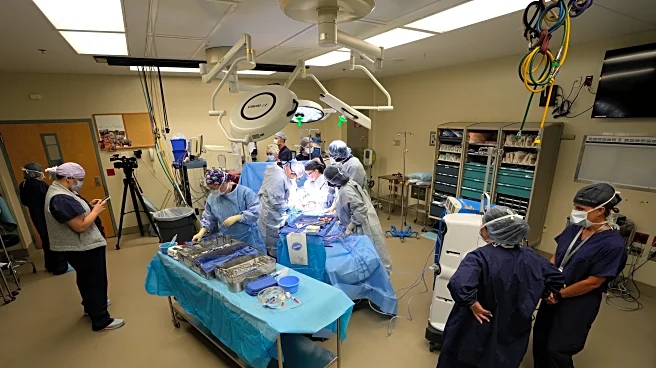
A recent study led by NYU Langone Health researchers has revealed a significant increase in organ donations from individuals who die after their heart stops beating, a practice known as donation after circulatory death. This method has become more common
in the United States over the past 25 years, largely due to technological advancements. The study found that circulatory-death donors have increased from 2% of all donors in 2000 to 49% in 2025. These donors now provide a substantial number of kidneys and livers, and their organs are increasingly used for lung, heart, and pancreas transplants. The study, published in the Journal of the American Medical Association, highlights the potential of this practice to meet the growing demand for organ transplants, with over 100,000 Americans currently on the waiting list.
Why It's Important?
The rise in organ donations after circulatory death is crucial in addressing the shortage of available organs for transplantation in the U.S. This practice allows for a broader donor pool, potentially saving thousands of lives. The study underscores the importance of public education and ethical considerations in expanding this practice. As more organs become available through this method, it could significantly reduce wait times for patients in need of transplants, thereby improving survival rates. The findings also suggest that technological advancements, such as normothermic regional perfusion and machine perfusion devices, have played a key role in making more organs viable for transplantation.
What's Next?
The study's authors emphasize the need for clear and consistent standards for donation after circulatory death to ensure patient safety and public trust. As this practice becomes more common, ongoing education and dialogue with patients, families, and healthcare providers will be essential. The researchers plan to further explore ways to improve donor identification and recovery practices, as well as to assess the long-term performance of organs from circulatory-death donors compared to those from brain-dead donors. These efforts aim to optimize the organ donation process and maximize the number of successful transplants.