








What's Happening?
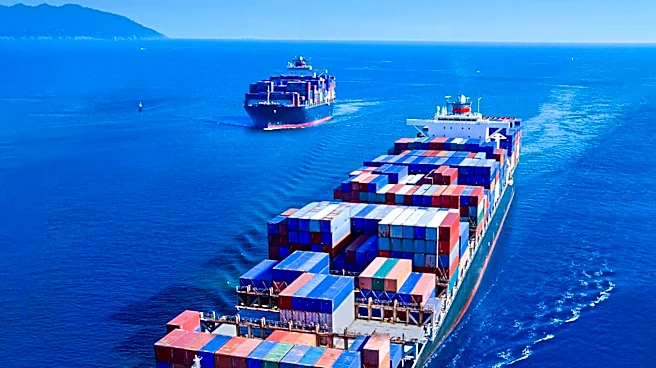
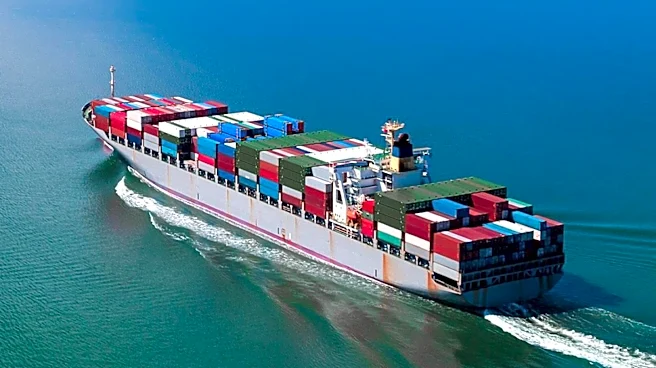
China's Sea Legend Line is set to launch a regular container service along Russia's Northern Sea Route (NSR), marking the first such service using the Arctic. This development follows a successful trial in September 2025, which set a speed record between
China and Northern Europe. The NSR, managed by Russia's Rosatom, has seen an increase in transits, with 23 containership voyages in 2025. The decline in sea ice has facilitated this new service, with Sea Legend licensing seven vessels for the route. The service, dubbed the 'Ice Silk Road,' will run until October 2026, with the first vessel, Dubai Tower, set to depart on August 15.
Why It's Important?
The launch of a regular Arctic container service by Sea Legend Line represents a significant shift in global shipping routes, potentially reducing transit times between Asia and Europe. This development could impact traditional routes like the Suez Canal, affecting global trade dynamics. The use of the NSR is controversial due to environmental concerns, as highlighted by opposition from groups like the Bellona Foundation. The service also underscores the geopolitical significance of the Arctic, with countries like South Korea planning to establish their own compliant services. The increased activity in the Arctic raises questions about environmental sustainability and international maritime regulations.
What's Next?
As Sea Legend Line begins its regular service, other shipping companies may follow suit, increasing traffic along the NSR. This could lead to further international scrutiny and potential regulatory changes to address environmental concerns. South Korea's planned demonstration trip could pave the way for more sustainable alternatives. The success of Sea Legend's service may prompt other nations to invest in Arctic shipping capabilities, potentially leading to increased geopolitical tensions over Arctic resources and routes. Monitoring the environmental impact and ensuring compliance with international regulations will be crucial as Arctic shipping becomes more prevalent.