



What's Happening?
The U.S. Department of State has approved a Foreign Military Sale (FMS) to Japan, valued at approximately $340 million, aimed at enhancing Japan's Hyper Velocity Gliding Projectiles (HVGP) capabilities. This sale includes equipment and services such as test
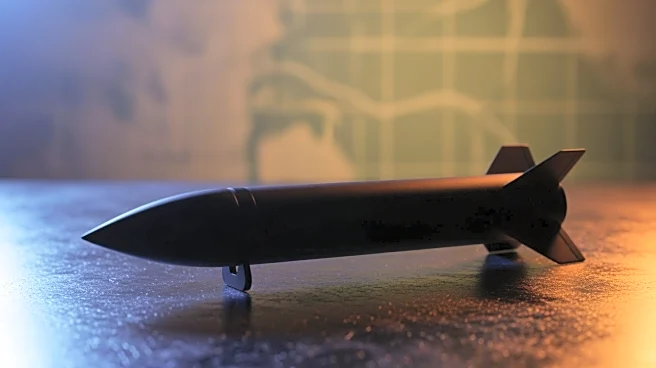
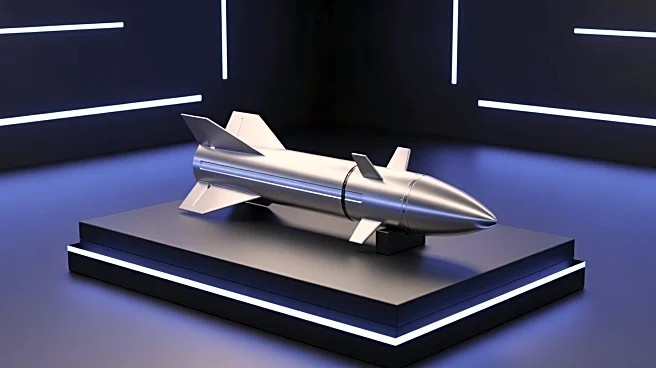
preparation, logistical transportation, and support during testing. The HVGPs are advanced missiles capable of traveling at supersonic speeds and following unpredictable paths, making them difficult to intercept. The Japanese government is developing these systems to strengthen its standoff capabilities, particularly to counter threats to remote islands. This transaction is part of broader efforts by the U.S. and Japan to reinforce security cooperation in response to evolving regional threats.
Why It's Important?
This sale is significant as it underscores the strengthening of defense ties between the U.S. and Japan amid increasing security challenges in the Indo-Pacific region. The HVGPs will enhance Japan's ability to defend its remote islands and maintain military balance in the face of potential threats. The transaction reflects a strategic move to bolster Japan's defense capabilities, ensuring it can effectively respond to current and future threats. This development is crucial for maintaining regional stability and demonstrates the U.S.'s commitment to supporting its allies in the region.
What's Next?
Following the approval of this sale, Japan will integrate these advanced missile systems into its armed forces. The U.S. will provide a range of support systems, including surveillance, safety reviews, and logistical assistance. Coordination meetings between the U.S. and Japan will facilitate the implementation of this defense enhancement. As Japan continues to develop its defense capabilities, further collaborations with the U.S. are likely, potentially leading to additional military sales and joint defense initiatives.
Beyond the Headlines
The sale of HVGPs to Japan highlights the growing importance of advanced missile technology in modern defense strategies. It also raises questions about the arms race in the Indo-Pacific region, as countries seek to enhance their military capabilities in response to perceived threats. This development may prompt neighboring countries to reassess their defense strategies and could lead to increased military spending in the region.