






What's Happening?
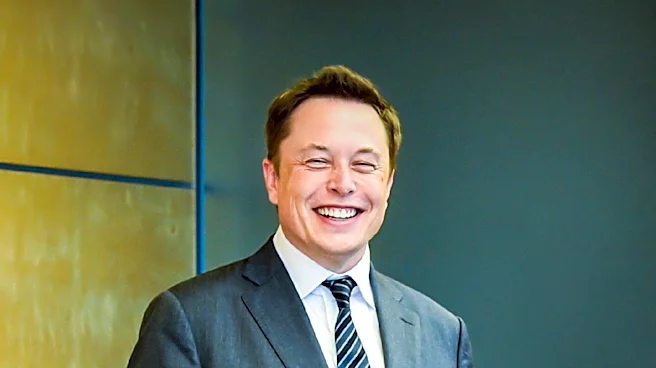
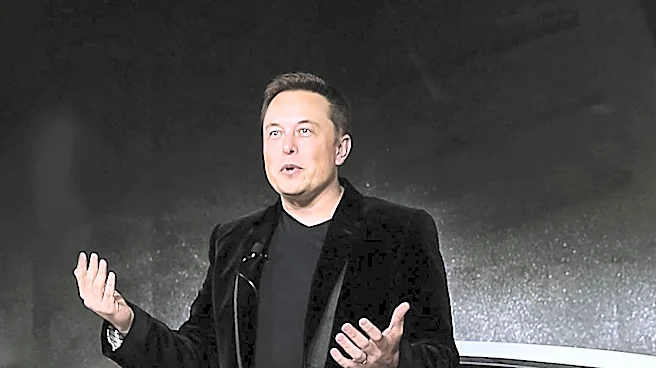
Elon Musk has initiated a public argument with Chess.com, a leading online chess platform, asserting his superior understanding of chess despite the platform's expertise and AI capabilities. The dispute began on X when Musk responded to a post about the vast
number of possible moves in chess, claiming that 'the actual number of moves that are not utterly stupid in chess is tiny' and that 'chess will be fully solved one day.' Chess.com retorted with 'skill issue,' prompting Musk to reiterate that chess is difficult for humans but not for computers, and that an artificial superintelligence would 'solve and compress' the game in ways humans cannot comprehend. He cited conversations with his personal AI chatbot, Grok, as evidence. Musk has previously expressed a disdain for chess, stating in 2022 that he found it 'too simple to be useful in real life.'
Why It's Important?
This public exchange, while seemingly trivial, highlights several significant aspects. Firstly, it underscores Elon Musk's tendency to engage directly and often controversially on social media, leveraging his platform to challenge established authorities, even in niche fields like chess. This behavior can influence public perception of expertise and the role of traditional institutions versus individual pronouncements. Secondly, the debate touches upon the broader implications of artificial intelligence on human endeavors. Musk's assertion that AI will 'solve' chess reflects a common perspective on AI's potential to surpass human capabilities, which has profound implications for industries reliant on human intellect and strategy, from finance to creative arts. This discussion, though framed around a game, mirrors larger societal anxieties and aspirations regarding AI's future impact and the evolving definition of human intelligence and skill in an AI-dominated world.
What's Next?
The immediate 'next' is likely continued social media engagement, with Chess.com and other chess enthusiasts potentially responding to Musk's claims. This could further fuel online discussions about the nature of chess, AI's role in strategic games, and the definition of 'solving' a game. Beyond the immediate online interaction, this incident could contribute to a broader public discourse on the perceived infallibility of AI and the future of human intellectual pursuits. It might also prompt more detailed explanations from AI experts and chess grandmasters about the nuances of chess complexity and the current limitations of AI, even in games where it excels. For Musk, this continues a pattern of public engagement that often generates attention for his views, whether on technology, business, or seemingly unrelated topics, reinforcing his image as a provocative thought leader.
Beyond the Headlines
The seemingly innocuous argument between Elon Musk and Chess.com delves into profound philosophical and cultural questions about the nature of intelligence, creativity, and the human experience in an increasingly AI-driven world. Musk's dismissal of chess as 'too simple' and his belief in AI's ultimate ability to 'solve' it reflect a utilitarian view of intellectual pursuits, where value is primarily measured by practical utility and computational efficiency. This perspective challenges the intrinsic value of human endeavors like chess, which are cherished for their complexity, strategic depth, and the human element of intuition and creativity. The debate implicitly questions whether 'solving' a game by brute force computation truly diminishes its intellectual worth or merely redefines the boundaries of human-AI interaction. It also highlights the cultural tension between technological progress and the preservation of traditional human skills and pastimes, prompting reflection on what it means to be 'intelligent' and 'skilled' in an era where machines can outperform humans in many cognitive tasks.