


What's Happening?
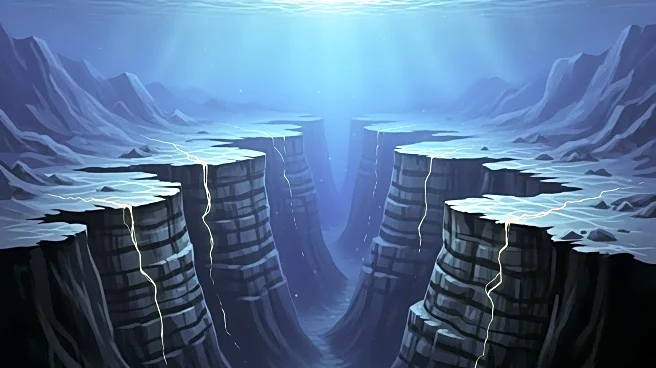
A recent study has unveiled that the massive underwater canyon system known as the King's Trough Complex in the North Atlantic was formed by tectonic movements rather than erosion. Located about 1,000 kilometers west of Portugal, this trench system stretches
over 500 kilometers and was previously thought to have been shaped by erosive forces similar to those that form land-based canyons. However, the study, published in Geochemistry, Geophysics, Geosystems, reveals that the canyon was created through a 'zipper effect' caused by the slow separation of the European and African tectonic plates over 24 million years. This process involved the plates being pulled apart, leading to the formation of deep chasms in the ocean floor. The research highlights the role of mantle plumes, which are columns of superheated material from deep within the Earth, in weakening the crust and facilitating the tectonic shifts.
Why It's Important?
This discovery is significant as it challenges previous assumptions about the formation of underwater canyons and provides new insights into the dynamics of Earth's geology. Understanding the role of tectonic movements and mantle plumes in shaping the Earth's surface can have broader implications for geological studies and the prediction of tectonic activity. The findings also underscore the complexity of geological processes and the interconnectedness of deep Earth activity with surface phenomena. This knowledge could influence future research in geophysics and contribute to more accurate models of Earth's geological history.
What's Next?
The study's findings may prompt further research into other underwater canyon systems to determine if similar tectonic processes are at play. Scientists may also explore the implications of mantle plumes on volcanic activity and tectonic plate interactions in other regions. Additionally, the data collected during the 2020 METEOR expedition, which included high-resolution sonar mapping and rock sample analysis, could be used to refine geological models and enhance our understanding of Earth's geodynamics.
Beyond the Headlines
The research highlights the importance of interdisciplinary approaches in geoscience, combining geophysics, geochemistry, and marine geology to unravel complex geological phenomena. It also raises questions about the potential impact of tectonic activity on marine ecosystems and the long-term evolution of oceanic landscapes. The study serves as a reminder of the dynamic nature of Earth's surface and the ongoing processes that shape our planet.