


What's Happening?
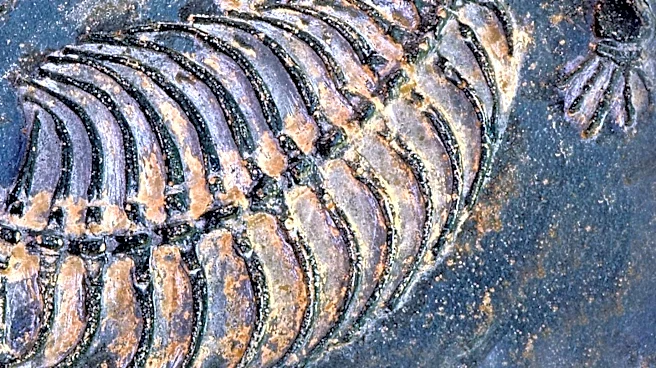
The Burgess Shale, a renowned Cambrian fossil site located in the Canadian Rockies of British Columbia, remains a significant source of scientific discovery and inspiration. Researchers have been studying this site for over a century, yet it continues
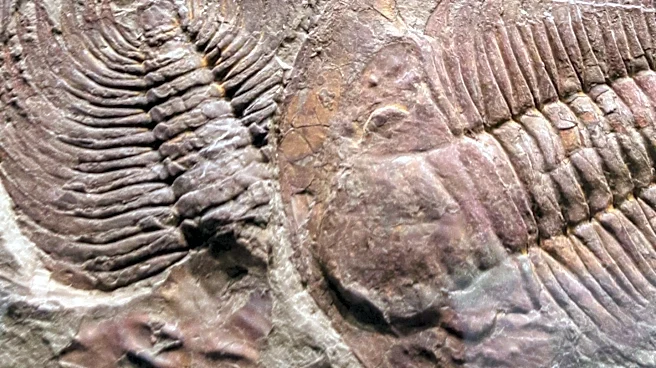
to yield new species and insights into early animal evolution. Dr. Jean-Bernard Caron, a scientist passionate about Cambrian creatures, recently gave a talk at TELUS Spark in Calgary, highlighting the unique and bizarre nature of these ancient invertebrates. The Burgess Shale is particularly noted for its well-preserved fossils that offer a glimpse into the Cambrian Explosion, a period of rapid evolutionary development. The site is a treasure trove for paleontologists and artists alike, providing endless inspiration and scientific data.
Why It's Important?
The ongoing discoveries at the Burgess Shale are crucial for understanding the Cambrian Explosion, a pivotal event in the history of life on Earth. This period marked a rapid diversification of life forms, many of which laid the groundwork for modern animal groups. The fossils found at the Burgess Shale help scientists piece together the evolutionary history of life, offering insights into how complex organisms evolved. For the scientific community, these findings are invaluable in studying evolutionary biology and paleontology. Additionally, the site serves as an educational and inspirational resource, drawing interest from both scientists and the public, thereby fostering a greater appreciation for natural history and evolutionary science.
What's Next?
As research continues at the Burgess Shale, scientists anticipate further discoveries that could reshape our understanding of early animal life. The site is expected to remain a focal point for paleontological research, with ongoing excavations and studies likely to uncover more about the diversity and complexity of Cambrian life. These findings may lead to new theories about evolutionary processes and the environmental conditions that facilitated such rapid diversification. The continued interest and study of the Burgess Shale will likely inspire future generations of scientists and artists, ensuring that this remarkable site remains at the forefront of paleontological research.
Beyond the Headlines
The Burgess Shale not only contributes to scientific knowledge but also raises questions about the preservation of natural heritage sites. As a UNESCO World Heritage Site, it highlights the importance of protecting and studying such locations to ensure that they continue to provide valuable insights into our planet's history. The ethical considerations of fossil excavation and the balance between scientific exploration and conservation are ongoing discussions within the scientific community. Furthermore, the site underscores the cultural and educational value of paleontological research, promoting a broader understanding of the Earth's biological past.