


What's Happening?
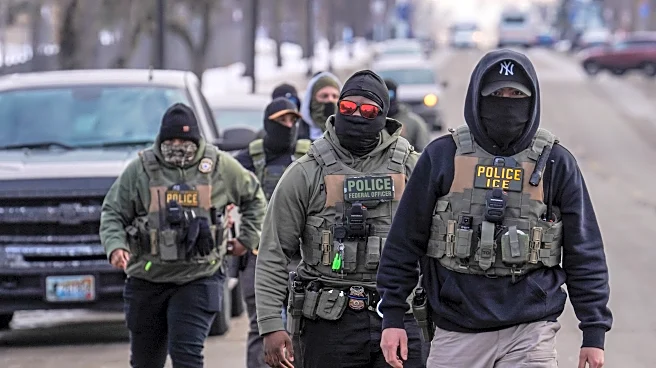
A former instructor at the U.S. Immigration and Customs Enforcement (ICE) academy, Ryan Schwank, has accused the agency of significantly reducing its training standards and misleading Congress about these changes. Schwank testified that ICE had cut 240
hours from its 580-hour training program, eliminating crucial classes on legal boundaries, detentions, arrests, and firearm training. He claimed that these reductions were part of a strategy to quickly increase the number of officers, compromising the quality of training. Schwank provided internal documents to support his claims, showing that the training program was shortened from 72 to 42 days. ICE has denied these allegations, stating that training hours remain unchanged despite the schedule adjustments.
Why It's Important?
The allegations against ICE raise serious concerns about the agency's ability to effectively train its officers, which could have significant implications for public safety and the enforcement of immigration laws. If training standards are indeed compromised, it could lead to inadequately prepared officers, increasing the risk of legal and operational failures. This situation also highlights potential accountability issues within federal agencies, as misleading Congress could undermine trust in governmental oversight. The controversy may prompt further investigations and calls for reforms in ICE's training practices, impacting the agency's operations and its relationship with lawmakers.
What's Next?
In response to these allegations, there may be increased scrutiny from Congress and other oversight bodies to investigate the claims and assess the current state of ICE's training programs. Lawmakers could push for hearings or independent reviews to ensure transparency and accountability. If the allegations are substantiated, ICE may face pressure to restore or enhance its training standards, potentially leading to policy changes or leadership adjustments. The situation could also influence broader discussions on immigration enforcement practices and the need for comprehensive training to uphold constitutional rights.