




What's Happening?
Northwestern Polytechnical University, a Chinese institution with strong ties to the People's Liberation Army and under U.S. export sanctions, purchased Nvidia's advanced H200 AI chips last month. Procurement records from October 21 show the university
acquired two H200 chips for 874,700 yuan ($123,000). The H200 is one of Nvidia's most powerful chips for training and running advanced AI systems and is subject to U.S. export license approvals, which are typically denied for blacklisted entities like Northwestern Polytechnical. The university, part of China's 'Seven Sons of National Defense' group, has a history of conducting defense-related research for Beijing. The chips were purchased from Shaanxi Bosuan Network Technology, not directly from Nvidia. Additionally, Northwestern Polytechnical secured access to H200 chips and other powerful Nvidia AI processors this year through five contracts for rented computing capacity from Chinese companies.
Why It's Important?
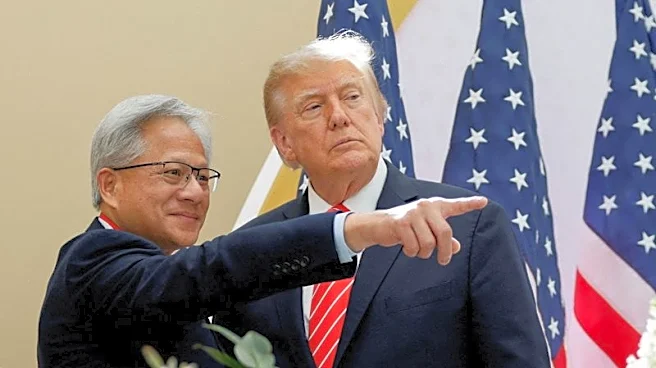
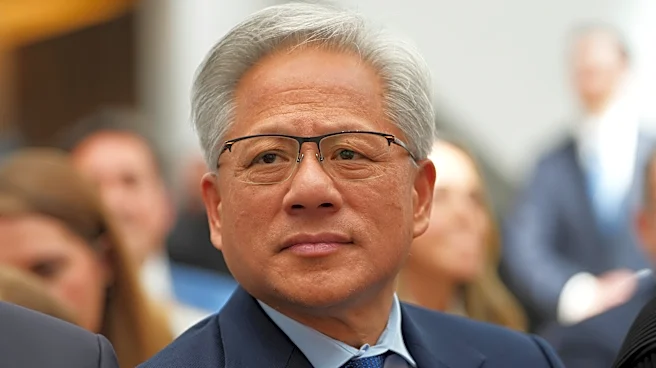
This acquisition highlights potential gaps in Washington's efforts to restrict China's access to advanced technology, particularly AI chips crucial for military modernization and weapons development. U.S. lawmakers have expressed concerns that access to Nvidia's most powerful AI chips could accelerate China's development of AI systems for defense applications, including weapons design and intelligence analysis. The incident also intensifies scrutiny on Nvidia and its CEO, Jensen Huang, who has lobbied for looser restrictions on AI chip sales to China, arguing it preserves American technological leadership. However, some U.S. officials believe such sales could undermine national security. The ability of blacklisted entities to acquire sensitive technology through third-party vendors or rented computing capacity poses a significant challenge to the effectiveness of export controls.
What's Next?
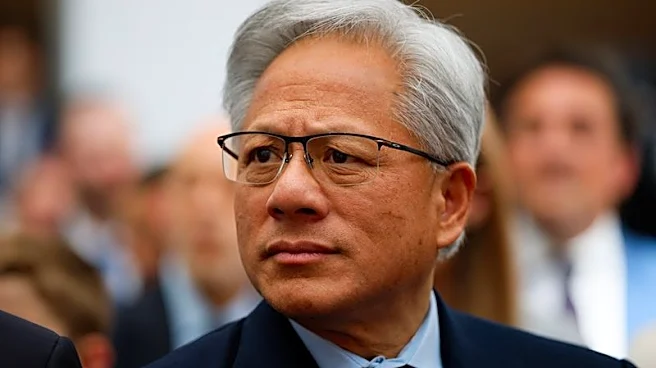
The revelation is likely to prompt increased calls from U.S. lawmakers for stronger controls on China's access to advanced AI chips. Both Democrats and Republicans in Congress have advocated for measures such as chip-tracking requirements and greater congressional oversight of exports. Three Republican congressional committee chairmen have requested a briefing with Nvidia CEO Jensen Huang regarding his reported contacts with an alleged Chinese intelligence operative. This incident could lead to a re-evaluation of existing export control mechanisms and potentially new regulations aimed at closing loopholes that allow blacklisted entities to acquire restricted technologies. The U.S. Commerce Department's Bureau of Industry and Security, which oversees export controls, may face pressure to enhance enforcement and monitoring efforts.
Beyond the Headlines
This development raises critical questions about the efficacy of current U.S. export control policies and the challenges of enforcing them in a complex global supply chain. The use of third-party vendors and rented computing capacity by blacklisted entities demonstrates the sophisticated methods employed to circumvent restrictions. This situation also highlights the dual-use nature of advanced AI technology, which has both civilian and military applications, making it difficult to control without impacting legitimate research and development. The ongoing tension between promoting technological innovation and safeguarding national security will continue to shape U.S. policy towards China. The incident could also spur further debate on the responsibilities of technology companies in adhering to export controls and the potential for their products to be used in ways that conflict with U.S. strategic interests.