
What's Happening?
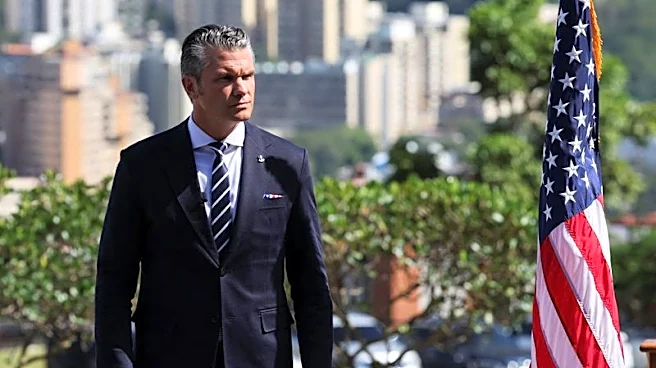
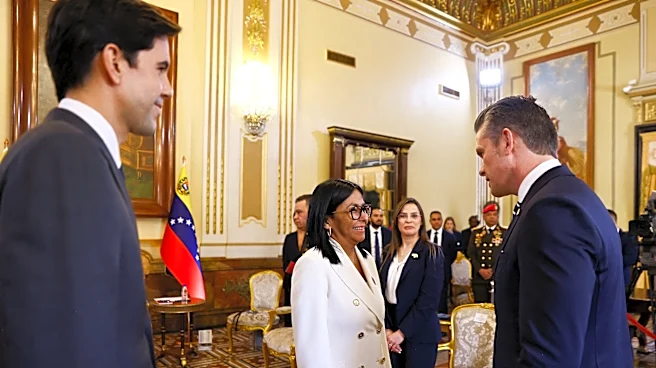
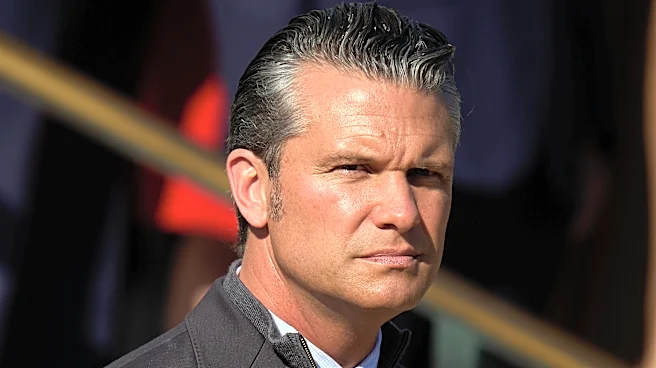
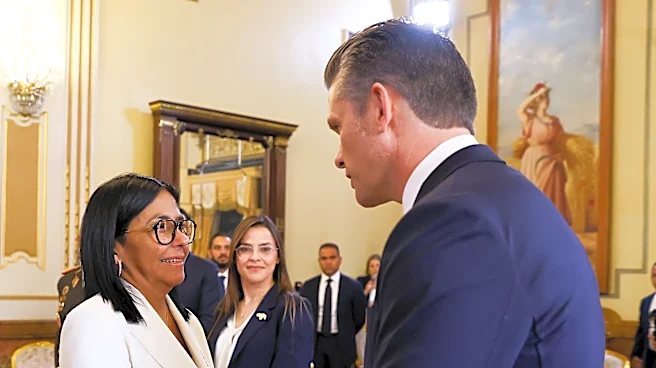
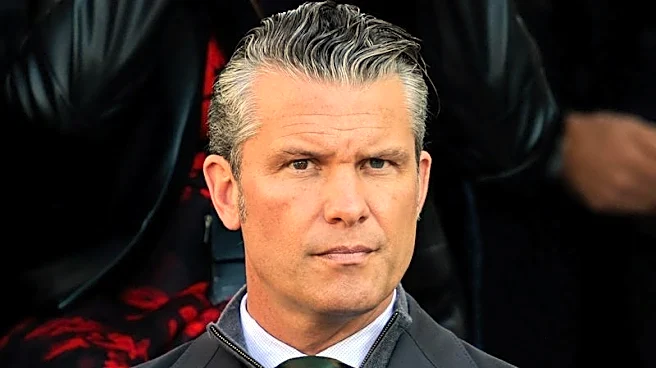
U.S. Secretary of Defense Pete Hegseth made an unannounced visit to Caracas, Venezuela, to announce an enhanced defense agreement. This agreement aims to protect the Venezuelan people from 'foreign actors,
narcoterrorists, or criminals.' Hegseth, who is on a regional tour focusing on security and anti-drug trafficking efforts, met with interim President Delcy Rodríguez and other Venezuelan officials. The agreement includes joint training, strategic cooperation, intelligence sharing, and the provision of defense equipment. This visit marks a significant shift in U.S.-Venezuela relations, which had been strained since 2005 when former President Hugo Chávez ended military cooperation. Hegseth emphasized that Venezuela has transitioned from being a 'most aggressive regional threat' to a 'secure collaborator,' attributing this change to President Trump's actions, including a military operation on January 3 that led to the capture of Nicolás Maduro and Cilia Flores. Other U.S. officials, including General Dan Caine, chairman of the Joint Chiefs of Staff, and Francis Donovan, head of the Southern Command, have also visited Caracas previously.
Why It's Important?
This agreement signifies a major geopolitical realignment in Latin America, particularly concerning U.S. influence and anti-narcotics strategies. The re-establishment of military cooperation with Venezuela, a country previously at odds with the U.S., could reshape regional security dynamics. For the U.S., it represents a potential expansion of its anti-drug trafficking operations and a strategic foothold in a region historically prone to instability. The emphasis on combating 'narcoterrorists' suggests a renewed focus on disrupting drug supply chains that impact the U.S. The shift in Venezuela's status from an adversary to a collaborator could also influence other nations in the region, potentially encouraging similar defense partnerships with the U.S. The agreement's provisions for joint training and intelligence sharing could enhance the capabilities of both militaries in addressing common threats, while the supply of equipment could modernize Venezuela's defense forces. This development could also lead to increased U.S. military presence in the region, as hinted by discussions of permanent military bases in Venezuela.
What's Next?
Following his visit to Caracas, Secretary Hegseth is scheduled to travel to Colombia to meet with his counterpart, Jorge Eduardo Mora, and deliver a Lockheed C-130 Hercules military cargo plane, the first in a series. This indicates a broader U.S. strategy to strengthen military ties and provide defense assets to allies in the region. The agreement with Venezuela is expected to lead to concrete actions, including joint military exercises and intelligence operations, to combat drug trafficking and other security threats. The Venezuelan Minister of Defense, Gustavo González López, has stated that the renewed cooperation will adhere to the Venezuelan Constitution and respect national sovereignty, suggesting a careful balancing act between international partnership and national interests. The U.S. has also issued a stern warning to 'narcoterrorists' in the region, vowing to pursue and eliminate them, which could lead to increased military interventions and operations in the coming months.
Beyond the Headlines
The re-establishment of military cooperation between the U.S. and Venezuela carries significant ethical and legal implications. The U.S. military operation on January 3, which led to the capture of Nicolás Maduro, was a highly controversial event, and the subsequent agreement raises questions about the legitimacy and long-term stability of the interim government in Venezuela. The U.S. emphasis on combating 'narcoterrorists' could be interpreted as a justification for broader military interventions, potentially blurring the lines between anti-drug operations and political objectives. The historical context of strained relations and previous U.S. interventions in Latin America adds a layer of complexity, with concerns about sovereignty and potential for unintended consequences. The agreement also highlights a shift in U.S. foreign policy under President Trump, prioritizing direct action and strategic partnerships to achieve security objectives, even with former adversaries. This could set a precedent for future engagements in other volatile regions.