



What's Happening?
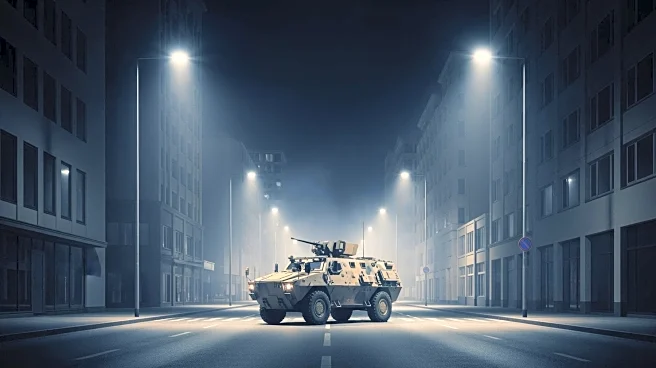
South Africa has initiated a significant military operation in Johannesburg to address escalating gang violence and illegal mining activities. President Cyril Ramaphosa announced the deployment of 550 soldiers to the Riverlea and Westbury suburbs, marking
the first major military intervention against organized crime in the city. This move follows Ramaphosa's recent speech highlighting organized crime as a major threat to democracy and economic development. The operation, which will last until the end of April, aims to support police efforts in curbing violence and restoring safety in affected areas. Residents have expressed relief at the military presence, although some critics view it as an indication of police inadequacy. The government plans to extend military operations to five other provinces, focusing on illegal mining and gang violence.
Why It's Important?
The deployment of military forces in Johannesburg underscores the severity of gang violence and its impact on public safety and economic stability in South Africa. By involving the military, the government acknowledges the limitations of police forces in managing organized crime. This action could set a precedent for future interventions in other regions facing similar challenges. The operation aims to restore order and protect citizens, potentially boosting public confidence in government efforts to address crime. However, it also raises concerns about the militarization of law enforcement and the potential for human rights violations. The success of this initiative could influence future policy decisions regarding crime prevention and law enforcement strategies.
What's Next?
The initial deployment in Johannesburg is expected to conclude by the end of April, with plans for broader military involvement across five provinces. The government will likely assess the operation's effectiveness in reducing crime rates and consider adjustments to its strategy. Political leaders and civil society groups may respond with calls for increased investment in community policing and social programs to address the root causes of crime. The international community will monitor the situation closely, as South Africa's approach to organized crime could influence regional security policies.