




What's Happening?
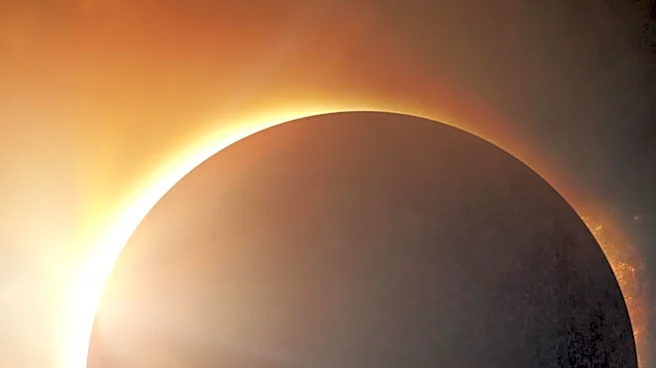
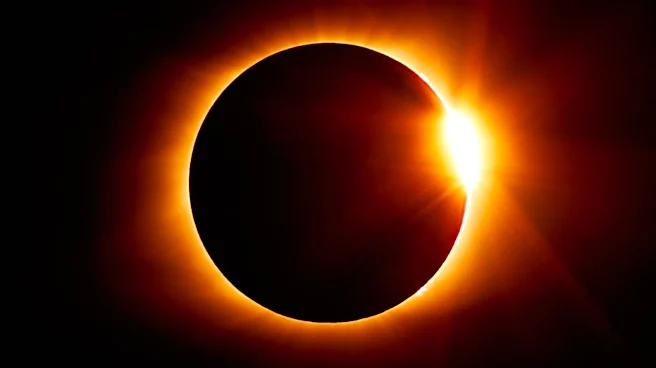
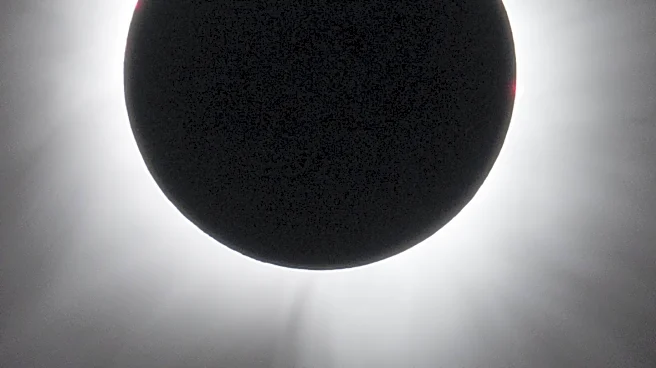
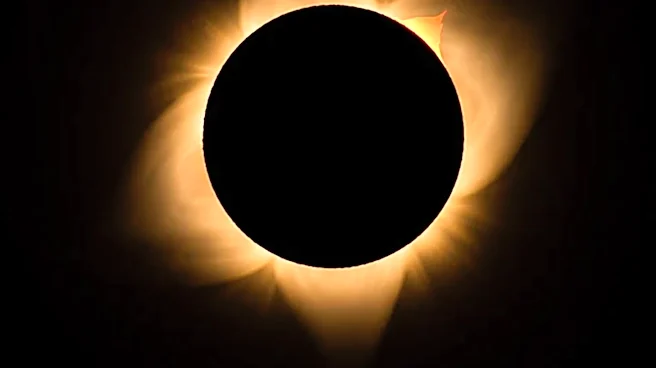
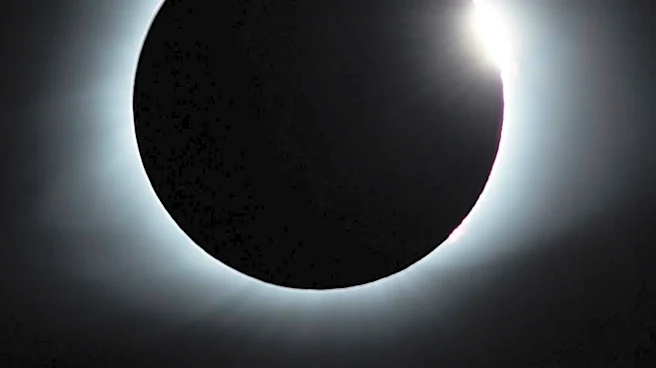
A total solar eclipse is set to occur on August 12, 2026, with millions of people across Greenland, Iceland, Portugal, Russia, and Spain in the path of totality. The eclipse will completely obscure the sun's disk, providing a spectacular celestial display.
Additionally, approximately 980 million people worldwide will witness a partial eclipse. In the northeastern U.S., states like New York, Maine, and Pennsylvania will experience the lunar disk taking a small 'bite' out of the sun. The event is part of a series of solar eclipses expected between 2026 and 2028.
Why It's Important?
Solar eclipses offer unique opportunities for scientific observation and public engagement with astronomy. The event will attract stargazers and researchers, providing insights into solar phenomena and atmospheric effects. It also serves as a reminder of the natural cycles and celestial mechanics that govern our planet. The widespread visibility of the eclipse across multiple regions highlights the interconnectedness of global communities through shared experiences of natural events. This eclipse is part of a 'Golden Age' of solar eclipses, promising more opportunities for observation and study in the coming years.
What's Next?
Preparations are underway for the eclipse, with safety guidelines and viewing equipment recommendations being shared to ensure safe observation. Livestreams will be available for those outside the path of totality, allowing global audiences to experience the event. Researchers and citizen scientists will conduct studies during the eclipse, contributing to our understanding of solar and atmospheric dynamics. The event will also inspire educational initiatives and public interest in astronomy, fostering a greater appreciation for science and the natural world.