








What's Happening?
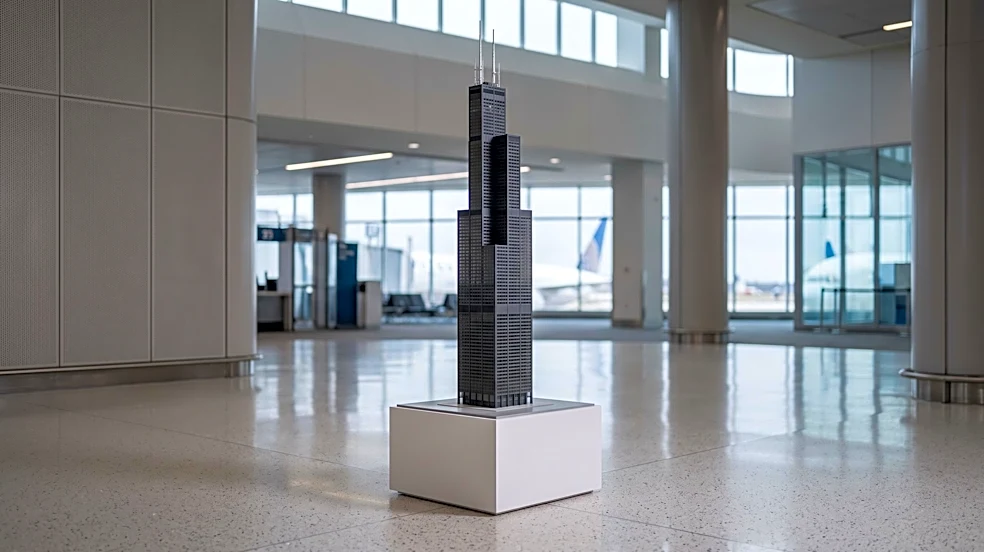
The Chicago Architecture Center (CAC) has installed a long-term exhibition titled 'Icons of Chicago' at O'Hare International Airport. This exhibit features three large-scale models of iconic modernist Chicago skyscrapers: Willis Tower (formerly Sears
Tower), 875 North Michigan Avenue (formerly the John Hancock Center), and the two towers of Marina City. These architectural models, with the tallest standing at 18 feet, were fabricated at a 1:91 scale in 2018 for the CAC's new location on the Chicago River. The display aims to remind travelers of Chicago's global reputation as the 'City of Architecture.' Marina City, designed by Bertrand Goldberg Associates in 1967, introduced the 'city within a city' concept to attract middle-class residents back to urban living. 875 North Michigan Avenue, completed in 1969 by Skidmore, Owings & Merrill, utilized engineer Fazlur Khan's 'trussed tube system' to enable construction of buildings over 100 stories. Willis Tower, also designed by Bruce Graham and Fazlur Khan of Skidmore, Owings & Merrill, was the world's tallest building for over 25 years after its completion in 1974.
Why It's Important?
This exhibition at a major international airport like O'Hare serves as a significant cultural and educational outreach initiative. By showcasing Chicago's architectural heritage to a diverse global audience, it reinforces the city's identity as a leader in architectural innovation and design. For the tourism industry, it acts as a prominent advertisement, potentially encouraging visitors to explore Chicago's architectural landmarks further, thereby boosting local businesses and cultural institutions. The display also highlights the engineering and design prowess that shaped these structures, offering insights into how innovations like Fazlur Khan's 'trussed tube system' revolutionized skyscraper construction. This public display underscores the enduring legacy of these buildings and their impact on urban development and architectural theory, influencing future generations of architects and engineers.
What's Next?
The 'Icons of Chicago' exhibition is a long-term display, suggesting its continued presence at O'Hare International Airport for an extended period. This ongoing visibility will ensure that millions of travelers passing through the airport will be exposed to Chicago's architectural achievements. The Chicago Architecture Center may leverage this prominent display to promote its other exhibitions and educational programs, potentially increasing visitor engagement and membership. Future initiatives could involve rotating exhibits or incorporating interactive elements to further enhance the traveler experience and deepen their understanding of Chicago's urban landscape. The success of this installation could also inspire similar collaborations between cultural institutions and transportation hubs in other major U.S. cities.
Beyond the Headlines
The exhibition subtly communicates the historical evolution of urban planning and architectural engineering in the U.S. Marina City's 'city within a city' concept reflects a mid-20th-century response to suburbanization, aiming to revitalize urban centers by integrating residential, commercial, and recreational spaces. The engineering breakthroughs in structures like 875 North Michigan Avenue and Willis Tower represent a continuous push against the limits of height and structural integrity, influencing global skyscraper design. This display at a transportation hub also highlights the intersection of infrastructure and cultural identity, positioning architecture not just as buildings but as symbols of civic pride and innovation. It encourages a deeper appreciation for the built environment and its role in shaping human experience and urban narratives.