






What's Happening?
The Solomon Islands Customs and Excise Division (SICED) has completed a training program aimed at strengthening its officers' capabilities in customs risk management, intelligence-led targeting, and border control. This initiative was conducted through
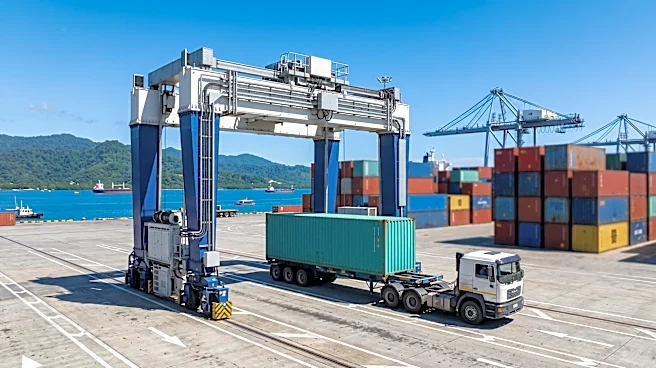
the World Customs Organization (WCO) and the United Nations Office on Drugs and Crime (UNODC) Passenger and Cargo Control Programme. The training focused on practical applications of risk management, including analyzing import trade data, developing profile report management templates, and identifying risk profile criteria. WCO Technical Expert Akosita Valamalua emphasized that with increasing international trade volumes and limited resources for physical inspections, risk management provides a crucial framework for customs administrations to focus controls on high-risk consignments while facilitating legitimate trade. The program also involved drafting Standard Operating Procedures (SOPs) for a proposed Port Control Unit and exploring the use of ASYCUDA World for risk profiling.
Why It's Important?
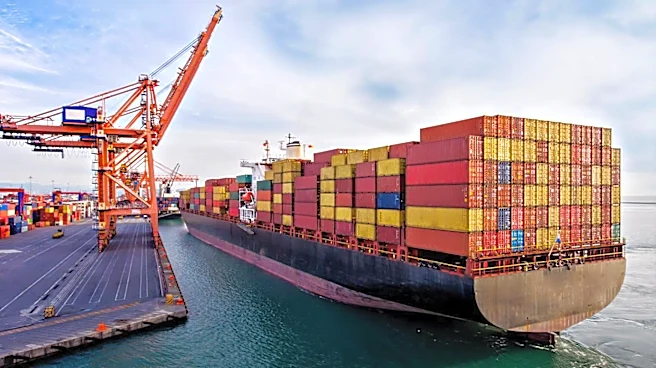
This training is vital for enhancing global supply chain integrity and combating transnational crime. By strengthening the risk management and targeting capabilities of customs officers in the Solomon Islands, the program directly contributes to more effective border security. This is particularly important given the ongoing challenge of illicit drugs and other high-risk goods moving through international supply chains in the Pacific region. Improved risk management allows customs administrations to make more informed decisions, optimize resource allocation, and concentrate efforts on the most significant risks. This balance between trade facilitation and compliance is crucial for maintaining secure and efficient international trade routes, which benefits global commerce by reducing the flow of illicit goods and ensuring legitimate trade can proceed smoothly.
What's Next?
Following the completion of this training, the Solomon Islands Customs and Excise Division plans to further embed risk management into its operational practices. This includes strengthening the use of customs data and intelligence, improving risk profiling and targeting methodologies, and supporting the ongoing development of the Port Control Unit in Honiara. These efforts are designed to ensure that Solomon Islands Customs remains adaptable and responsive to evolving border risks while continuing to facilitate legitimate trade and the movement of goods across its borders. Continued engagement with regional and international partners is also anticipated to further enhance technical capacity, intelligence sharing, and operational responses to emerging threats.
Beyond the Headlines
The initiative underscores a broader global trend towards intelligence-led border management and the critical role of international cooperation in addressing complex challenges like transnational crime and supply chain security. The WCO's emphasis on risk management as a guiding principle for modern customs administration highlights a shift from universal physical inspections to more strategic, data-driven approaches. This not only improves efficiency but also fosters a more secure and predictable environment for international trade. The collaboration between organizations like the WCO, UNODC, and the Australian Border Force exemplifies the interconnectedness of global security and economic stability, demonstrating that effective border protection is a shared responsibility requiring coordinated efforts and continuous capacity building.