





What's Happening?
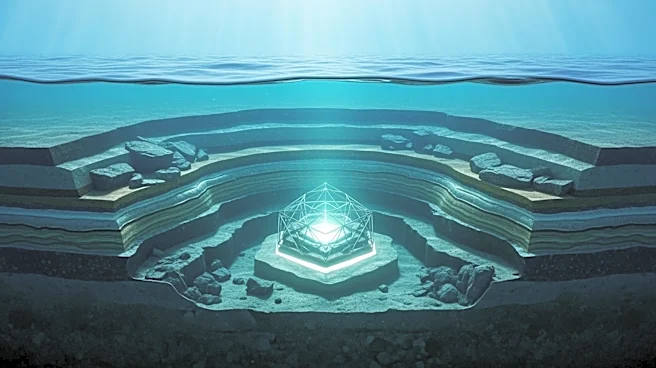
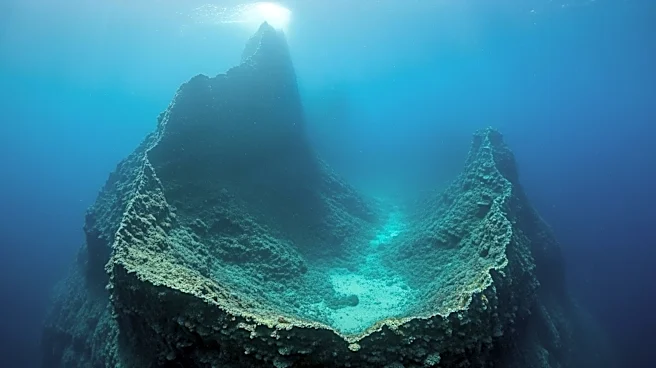
A team of researchers from the Carnegie Institution of Washington and Yale University has uncovered a hidden geological structure beneath Bermuda that explains why the island remains elevated above the ocean floor. This discovery reveals that a 12-mile-thick
slab of lighter rock, formed 30 to 35 million years ago, lies beneath Bermuda's normal ocean crust. This slab, which is lighter than the surrounding rock, causes the island to float and remain elevated. The research utilized over 20 years of natural earthquake vibrations to map the depths and thicknesses of rock layers beneath the island. This finding challenges the traditional understanding of how islands like Bermuda remain above sea level, as it does not rely on active volcanic activity or mantle plumes, which are typically responsible for such geological formations.
Why It's Important?
The discovery of this hidden structure beneath Bermuda has significant implications for the understanding of geological processes. It suggests that there are other convective processes within Earth's mantle that have yet to be fully understood, potentially altering the scientific community's approach to studying similar geological phenomena. This finding could lead to a reevaluation of how islands and other elevated oceanic features are formed and maintained. Additionally, the research highlights the importance of using advanced seismic techniques to uncover hidden geological features, which could have broader applications in the study of Earth's geology and the prediction of natural disasters.
What's Next?
The research team may continue to explore the implications of their findings, potentially leading to further studies on the convective processes within Earth's mantle. This could involve more detailed seismic mapping of other oceanic regions to identify similar hidden structures. The scientific community may also engage in discussions and debates regarding the traditional models of island formation and the role of ancient volcanic activity in maintaining elevated landforms. These discussions could influence future geological research and educational curricula, as well as inform policy decisions related to natural disaster preparedness and environmental conservation.
Beyond the Headlines
The discovery of the hidden structure beneath Bermuda also raises questions about the potential for similar geological features elsewhere in the world. This could lead to a broader investigation into the stability and longevity of other islands and oceanic plateaus. Additionally, the gravitational anomaly associated with the Bermuda Rise, where the pull of gravity is slightly weaker than expected, may prompt further research into the relationship between geological structures and gravitational forces. Understanding these dynamics could have implications for fields such as geophysics and planetary science, offering insights into the formation and evolution of other celestial bodies.