





What's Happening?
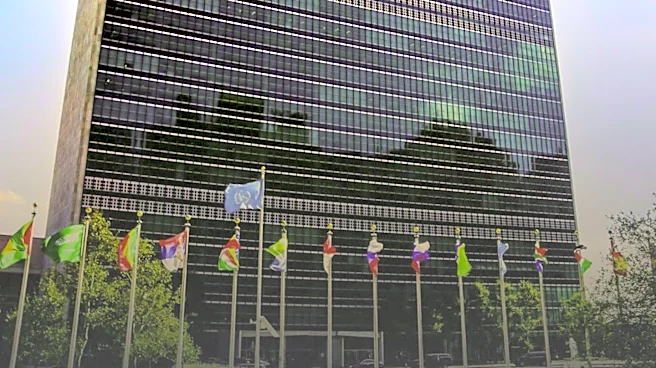
Discussions are underway regarding the structural reform agenda of the United Nations, with a particular focus on organizations like the United Nations Development Programme (UNDP) and the United Nations Office for Project Services (UNOPS). Delegations
have encouraged UNDP to contribute to a more coherent, efficient, and country-focused UN development system. Key areas of emphasis include the importance of shared services, stronger coordination at the country level, and the 'expertise on demand' initiative. The need for a clear business case, a robust political strategy, and effective change management has been highlighted as crucial for any reform effort to succeed. There is also a call for the UN to prioritize visible results to maintain its relevance in the global landscape. Suggestions have been made to delegate internal reform processes and to avoid competing for donor funding, indicating a desire for a more streamlined and impactful operational model.
Why It's Important?
The proposed structural reforms within the United Nations are important because they aim to address long-standing issues of efficiency, coherence, and relevance in global development efforts. By encouraging a more country-focused approach and stronger coordination, the UN seeks to maximize the impact of its programs and better serve the needs of member states. The emphasis on shared services and 'expertise on demand' could lead to more cost-effective operations and better utilization of resources, which is critical given the challenges of shrinking Official Development Assistance (ODA) budgets. A successful reform could enhance the UN's credibility and its ability to respond to complex global crises, from humanitarian aid to climate finance. Conversely, a failure to implement meaningful reforms could further erode trust in the multilateral system and diminish the UN's capacity to act as a leading force in international cooperation, potentially leaving critical global issues unaddressed or poorly managed.
What's Next?
The future of the United Nations structural reform agenda will likely involve continued discussions and negotiations among member states and UN leadership. The incoming Secretary-General is advised to prioritize visible results to rebuild trust and generate political support for institutional changes. There is a strong recommendation to delegate internal reform processes, such as the UN80 reform, to a trusted Chief Operating Officer or Chief of Staff, allowing the Secretary-General to focus on broader leadership and peacemaking roles. The UN is also urged to reconsider its role as a primary delivery mechanism for donor assistance, potentially shifting towards providing expert advice and convening, while championing the cause of development. The success of these reforms will depend on the political will of member states and the ability of UN leadership to demonstrate tangible improvements in its operations and impact, particularly in areas like peace and security, development, and addressing global inequalities.
Beyond the Headlines
Beyond the immediate operational adjustments, these structural reforms touch upon deeper ethical and philosophical questions about the UN's role in a rapidly changing world. The call to delegate internal reforms and focus on visible results reflects a growing sentiment that the UN needs to be more agile and less bureaucratic to effectively tackle interconnected global crises. The debate over whether the UN should continue to be a primary 'delivery mechanism' for donor assistance or shift to a more advisory and coordinating role highlights a fundamental re-evaluation of its purpose and comparative advantage. This shift could empower local actors and foster more sustainable, partnership-based development models, moving away from a top-down approach. Furthermore, the emphasis on demonstrating relevance through tangible outcomes underscores a broader challenge for multilateral institutions: maintaining legitimacy and public support in an era of increasing skepticism and nationalistic tendencies. The long-term implications could reshape global governance, influencing how international cooperation is structured and how resources are allocated to address pressing global challenges.