






What's Happening?
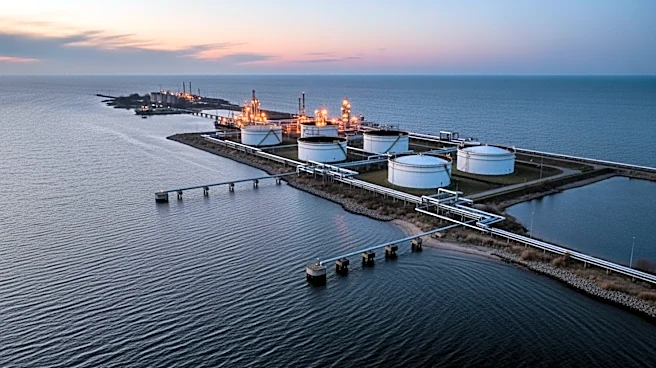
Ukraine has intensified its military strategy by targeting Russian oil export infrastructure in the Baltic Sea, specifically in the Leningrad region. Ukrainian drones have struck key oil terminals at Primorsk and Ust-Luga, which are crucial for Russia's
oil exports, accounting for about 30% of its total oil exports. These strikes are part of a broader campaign by Ukraine to disrupt Russian energy infrastructure, a strategy that has been ongoing for nearly a year. The recent attacks mark a shift in Ukraine's tactics, moving from targeting domestic processing capabilities to focusing on export routes that are vital for Russia's international oil trade. This development comes amid increased global demand for Russian oil due to geopolitical tensions in the Middle East.
Why It's Important?
The strikes on Russian oil infrastructure are significant as they directly impact Russia's ability to generate revenue from its oil exports, which are crucial for funding its war efforts. By targeting these export routes, Ukraine aims to exert economic pressure on Russia, potentially reducing its financial capacity to sustain military operations. However, this strategy carries diplomatic risks, as some European allies have expressed concerns over the potential impact on global oil supply and market stability. The strikes could lead to tighter global oil supplies, affecting international markets and potentially straining Ukraine's relations with its Western allies.
What's Next?
Ukraine may continue its strategy of targeting Russian oil infrastructure if it can manage the diplomatic fallout with its Western allies. The extent of the damage and Russia's ability to repair its infrastructure will determine the long-term impact of these strikes. If Ukraine persists with these attacks, it could further cripple Russia's oil export capacity, but it risks alienating allies who are wary of the broader economic consequences. The situation remains fluid, with potential for further escalation depending on the responses from both Russia and Ukraine's allies.
Beyond the Headlines
The strategic targeting of oil infrastructure highlights the evolving nature of modern warfare, where economic targets are increasingly used to exert pressure. This approach underscores the interconnectedness of military and economic strategies in geopolitical conflicts. The use of drones for long-range strikes also reflects advancements in military technology, allowing smaller nations to challenge larger powers by targeting critical economic assets. The situation raises questions about the ethical implications of targeting civilian infrastructure and the potential for unintended consequences in global markets.