


What's Happening?
A severe weather system is expected to disrupt post-holiday travel across the United States, particularly affecting the Midwest and Northeast regions. The National Oceanic and Atmospheric Administration has issued warnings for a 'bomb cyclone,' a rapidly
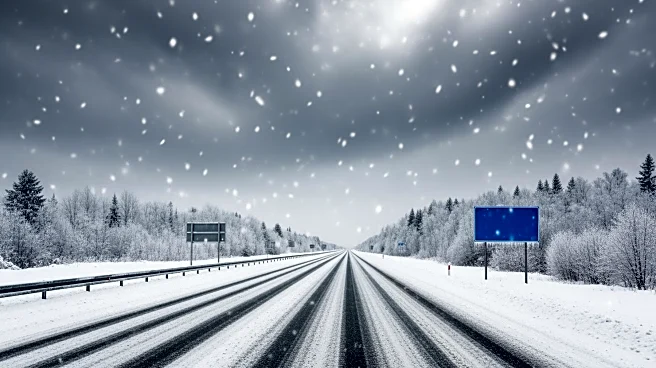
intensifying storm, which is predicted to bring heavy snow and strong winds. This will result in whiteout conditions and near-zero visibility from Sunday through Monday. The Upper Midwest and Great Lakes region could see snowfall accumulations of up to two feet, with potential power outages due to the storm's intensity. Additionally, freezing rain is anticipated to create hazardous icy road conditions in New England. The storm is also expected to bring a wave of arctic air, causing temperatures to plummet and potentially leading to icy roads in the South and Central U.S. The weather system has already caused significant travel disruptions, with numerous flight delays reported at major airports such as Chicago O'Hare and Minneapolis-St. Paul.
Why It's Important?
The impending storm poses significant challenges for post-holiday travelers, with the potential to disrupt flights and road travel across large parts of the country. The combination of heavy snowfall, strong winds, and freezing rain could lead to dangerous travel conditions, power outages, and damage to infrastructure. The economic impact could be substantial, affecting airlines, transportation services, and local businesses reliant on holiday traffic. Additionally, the storm highlights the increasing frequency and intensity of extreme weather events, which may be linked to broader climate patterns. This situation underscores the need for robust emergency preparedness and infrastructure resilience to mitigate the effects of such severe weather events.
What's Next?
As the storm progresses, travelers and residents in affected areas are advised to monitor weather updates and heed warnings from local authorities. Airlines and transportation services are likely to continue experiencing disruptions, and travelers should prepare for potential delays and cancellations. Emergency services and utility companies may need to respond to power outages and infrastructure damage. In the longer term, this event may prompt discussions on improving weather forecasting, emergency response strategies, and infrastructure resilience to better handle future extreme weather events.