





What's Happening?
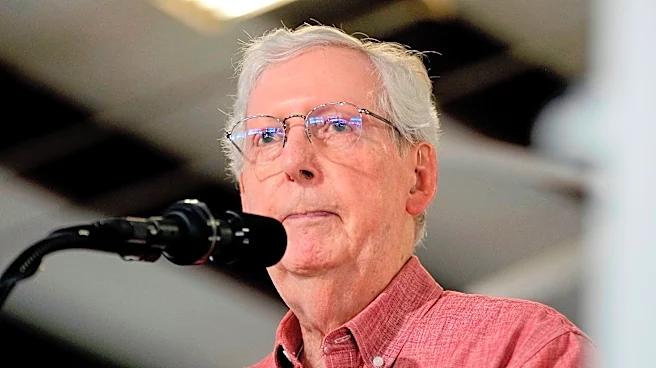
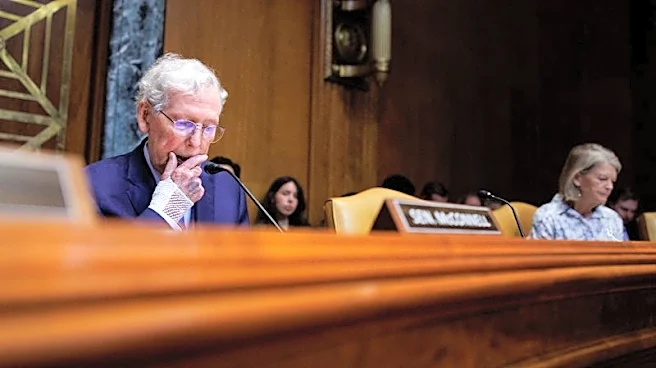
Senator Mitch McConnell, the Republican from Kentucky, has announced that he will not be returning to the Senate as it reconvenes due to ongoing recovery from a fall and subsequent pneumonia. McConnell, who is 84 years old, suffered a fall in mid-June
that left him briefly unconscious. During his hospitalization, he developed pneumonia and was treated with antibiotics. He is currently in a rehabilitation center focusing on physical therapy and strategies to prevent future falls. McConnell has been out of the public eye since the incident but has been working with his legislative staff and maintaining communication with Senate colleagues.
Why It's Important?
McConnell's absence from the Senate is significant as he is a key figure in the Republican Party and holds considerable influence over legislative processes. His health issues and subsequent absence could impact the Senate's ability to pass critical legislation, especially if his vote is pivotal. Additionally, his condition raises concerns about the health and capacity of senior political leaders in the U.S., potentially prompting discussions about age and health in political office. The situation underscores the importance of succession planning and the readiness of other leaders to step in if necessary.
What's Next?
While McConnell has not specified a return date, his ongoing recovery will likely continue to affect Senate operations. The Senate may need to adjust its schedule or voting procedures to accommodate his absence. Political leaders and colleagues may also need to prepare for extended periods without his direct involvement. The situation could lead to increased scrutiny of McConnell's health and potential discussions about leadership transitions within the Republican Party if his recovery is prolonged.