






What's Happening?
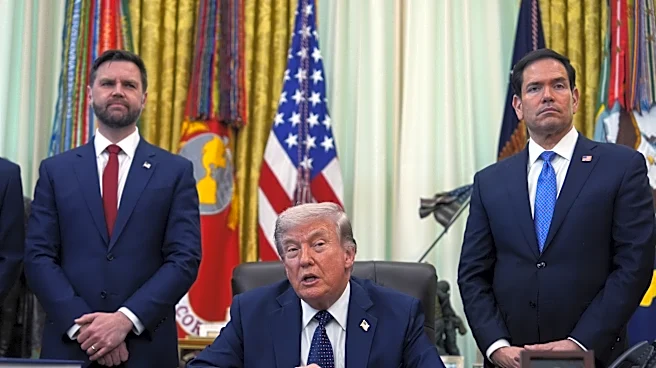
President Trump announced the extension of the ceasefire between Israel and Lebanon by three weeks. This decision follows the initial agreement reached on April 16. The extension aims to provide additional time for ongoing peace talks involving Iran,
which are crucial for stabilizing the region. The ceasefire is part of broader diplomatic efforts to address tensions in the Middle East, with the United States playing a significant role in facilitating discussions. The extension reflects a commitment to maintaining peace and preventing further conflict between the two nations.
Why It's Important?
The extension of the ceasefire is significant as it underscores the United States' role in Middle Eastern diplomacy. By prolonging the ceasefire, the U.S. aims to foster a conducive environment for peace talks, potentially leading to a more stable geopolitical landscape. This move could have implications for U.S. foreign policy, as successful negotiations might enhance the country's influence in the region. Additionally, a sustained ceasefire could prevent further humanitarian crises and promote economic stability in the affected areas, benefiting both local populations and international stakeholders.
What's Next?
The next steps involve continued diplomatic engagement with Iran and other regional players to solidify the ceasefire into a lasting peace agreement. The U.S. is expected to maintain its mediating role, with potential follow-up meetings and negotiations on the horizon. Stakeholders will likely monitor the situation closely, as any breakdown in talks could lead to renewed hostilities. The international community may also increase its involvement to support the peace process and ensure compliance with the ceasefire terms.