






What's Happening?
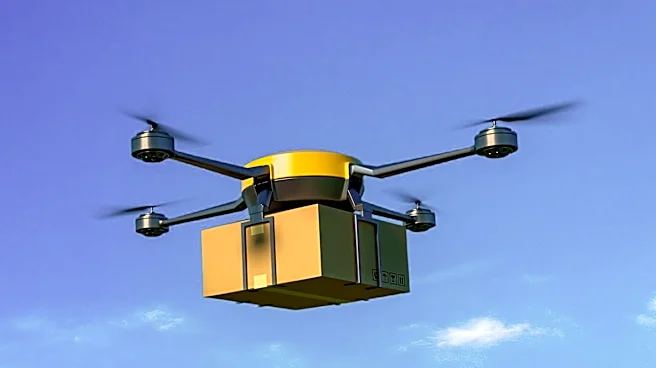
The Hamilton County Sheriff's Office (HCSO) has received final approval from county commissioners to purchase new drones, despite privacy concerns raised by a local resident. Sheriff Austin Garrett addressed these concerns, emphasizing that his office
adheres to federal laws governing drone usage, specifically Tennessee Code Annotated 39-13-609, the Freedom from Unwarranted Surveillance Act. This act mandates that law enforcement cannot use drones without a warrant unless there is an immediate danger, or they are searching for a missing person or fugitive. The HCSO's existing drone fleet has significantly decreased from 26 to eight due to changes in state and federal guidelines that necessitated replacing Chinese-made drones. Sheriff Garrett highlighted the effectiveness of drones, stating that in their ten-year history, they have located over 34 missing individuals or fugitives. An HCSO spokesperson clarified that video collected must be deleted within 15 business days unless it is directly relevant to the lawful reason for drone deployment, and live stream video is only distributed to authorized personnel.
Why It's Important?
The acquisition of new drones by the Hamilton County Sheriff's Office represents a significant investment in law enforcement technology, aiming to enhance public safety and operational efficiency. However, it also brings to the forefront the ongoing tension between security measures and individual privacy rights. The concerns raised by residents reflect a broader societal debate about surveillance technology and its potential for misuse. The HCSO's reliance on the Freedom from Unwarranted Surveillance Act is crucial for establishing legal boundaries and building public trust. The reduction in their existing fleet due to restrictions on Chinese-made drones underscores geopolitical and national security considerations impacting local law enforcement. The ability of drones to locate missing persons and fugitives demonstrates their practical value, but transparent policies on data retention and access are vital to mitigate privacy risks.
What's Next?
The Hamilton County Sheriff's Office will proceed with integrating the new drones into its operations, likely enhancing its capabilities in search and rescue missions, fugitive apprehension, and emergency response. The HCSO will need to continue transparently communicating its policies and adherence to the Freedom from Unwarranted Surveillance Act to address ongoing public concerns. As drone technology evolves, there may be further legislative or policy adjustments at both state and federal levels regarding their use by law enforcement. Public discourse on privacy versus security will likely persist, potentially leading to more community engagement initiatives or oversight mechanisms to ensure responsible deployment of these technologies. The HCSO's commitment to deleting irrelevant video footage within 15 business days will be a key factor in maintaining public confidence.
Beyond the Headlines
The debate surrounding law enforcement's use of drones delves into fundamental questions about the nature of privacy in the digital age and the balance of power between the state and its citizens. While drones offer undeniable benefits in critical situations, their pervasive use could lead to a 'surveillance creep,' where technology initially deployed for specific, urgent purposes gradually expands into broader monitoring. The ethical implications of collecting and storing visual data on citizens, even with strict deletion policies, are profound. This situation also highlights the rapid pace of technological advancement outpacing legal and ethical frameworks, necessitating continuous adaptation and public dialogue. The HCSO's experience with replacing Chinese-made drones also points to the complex interplay of national security, supply chain integrity, and local law enforcement capabilities, illustrating how global politics can influence domestic policing tools.