







What's Happening?
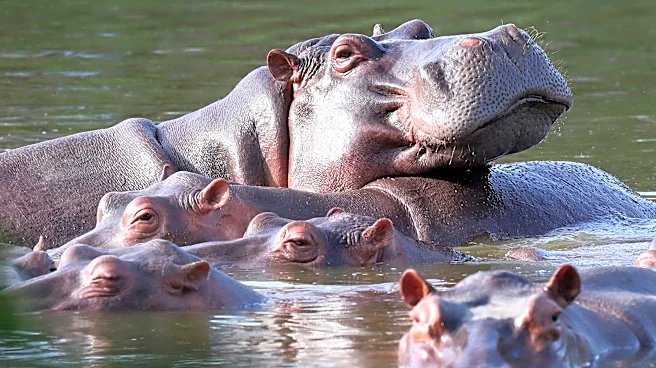
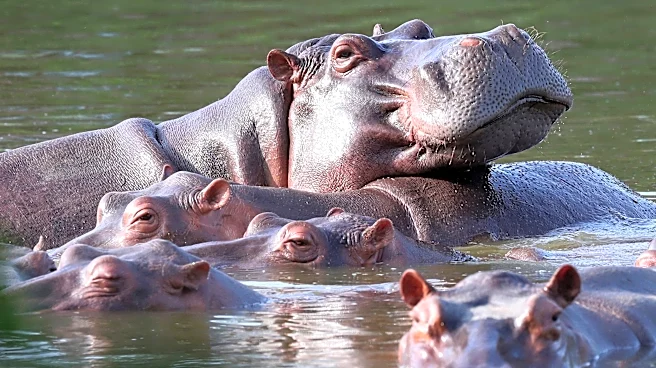
Colombian officials have authorized a plan to cull up to 80 hippos that are descendants of those brought to the country by drug lord Pablo Escobar in the 1980s. These hippos, which have been roaming freely in the central region of Colombia, pose a threat
to local ecosystems and villagers. Previous attempts to control their population through neutering and relocation have proven costly and ineffective. The hippos, now numbering around 170, have become a tourist attraction but also compete with native species for resources. The decision to cull them has sparked controversy, with animal rights activists opposing the measure.
Why It's Important?
The presence of hippos in Colombia, a country outside their natural habitat, presents significant ecological challenges. These animals disrupt local ecosystems by competing with native species and pose safety risks to humans. The decision to cull them reflects the complexities of managing invasive species and balancing ecological preservation with animal welfare concerns. The controversy surrounding the culling highlights broader ethical debates about wildlife management and conservation strategies, particularly in regions with a history of conflict and environmental challenges.
What's Next?
The culling plan is expected to face opposition from animal rights groups and could lead to further discussions on alternative methods of population control. The Colombian government may need to engage with stakeholders to address concerns and explore more sustainable solutions. The situation also underscores the importance of international cooperation in managing invasive species and protecting biodiversity. As Colombia moves forward with its plan, the outcome could influence future policies on wildlife management and conservation efforts in similar contexts.