






What's Happening?
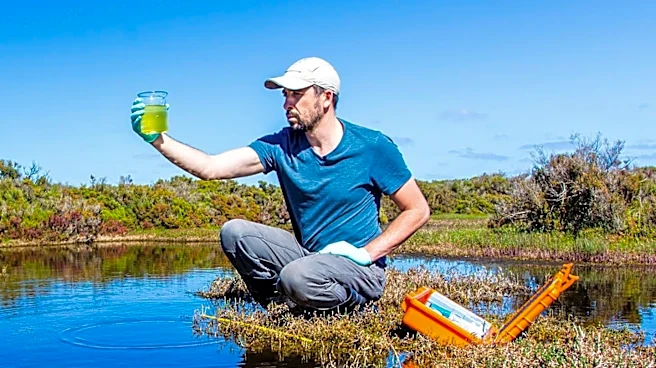
Environmental testing has officially commenced in Ladera Ranch, Southern California, in response to community concerns over a cluster of rare cancer cases. Cal State Fullerton researchers, including Professor Daniel Curtis from the chemistry department,
are collecting samples from three local parks to investigate potential environmental links to the reported cases of Ewing sarcoma. This rare bone and soft tissue cancer primarily affects young children and teens, accounting for approximately 1% of childhood cancers, with about 225 diagnoses annually nationwide, according to Johns Hopkins. Despite its rarity, the Ladera Ranch area has recorded 9 to 12 cases of Ewing and synovial sarcoma, with six reported deaths, including a 23-year-old and a 17-year-old who passed away earlier this year. Residents have voiced strong concerns, particularly regarding pesticide use, and have demanded that the homeowners association cease spraying these chemicals. A previous county-level review in 2024 did not identify an unusual pattern, but the community advocated for a more focused assessment due to limited data at the time. Researchers from USC have also committed to conducting their own investigations.
Why It's Important?
The situation in Ladera Ranch highlights critical public health and environmental concerns within U.S. communities. The emergence of a cancer cluster, particularly involving a rare disease like Ewing sarcoma, raises questions about potential environmental contaminants and their impact on human health. This investigation could set precedents for how local governments and scientific institutions respond to community-led health concerns, especially when initial reviews are deemed insufficient. If a link between environmental factors, such as pesticides, and cancer is established, it could lead to significant policy changes regarding chemical use in residential areas, influencing public health regulations and environmental protection standards across the nation. The involvement of multiple academic institutions underscores the scientific community's commitment to understanding and addressing such health crises, potentially advancing research into environmental carcinogenesis. Furthermore, it emphasizes the power of community advocacy in prompting official investigations and demanding accountability for public health outcomes.
What's Next?
Test results from the environmental samples collected by Cal State Fullerton researchers are anticipated as early as the end of the current week. These findings will be crucial in determining the next steps for the Ladera Ranch community and local authorities. Depending on the results, there could be further, more extensive environmental testing, or a shift in focus to other potential causes if no immediate links are found. Residents are likely to continue their advocacy for a halt to pesticide spraying, and the scientific data will either support or challenge their claims, influencing future land management practices. The ongoing research by USC will also contribute to a broader understanding of the situation, potentially offering additional insights or corroborating findings. The community will be closely watching for official recommendations and actions from health and environmental agencies, which could include public health advisories, remediation efforts, or changes in local ordinances regarding chemical use.
Beyond the Headlines
The Ladera Ranch cancer cluster transcends a localized health issue, touching upon broader societal implications concerning environmental justice and the precautionary principle. The community's demand for a cessation of pesticide use, even without definitive proof of causation, reflects a growing public distrust in the safety of commonly used chemicals and a desire for proactive measures to protect vulnerable populations, particularly children. This scenario underscores the ethical dilemma between economic interests (e.g., landscaping practices) and public health, prompting a re-evaluation of risk assessment methodologies. It also highlights the challenges in proving environmental causation for rare diseases, often requiring long-term studies and interdisciplinary collaboration. The outcome of this investigation could influence how similar clusters are addressed nationwide, potentially leading to increased scrutiny of environmental health impacts in residential developments and a greater emphasis on transparent communication between scientific bodies, government agencies, and affected communities.