









What's Happening?
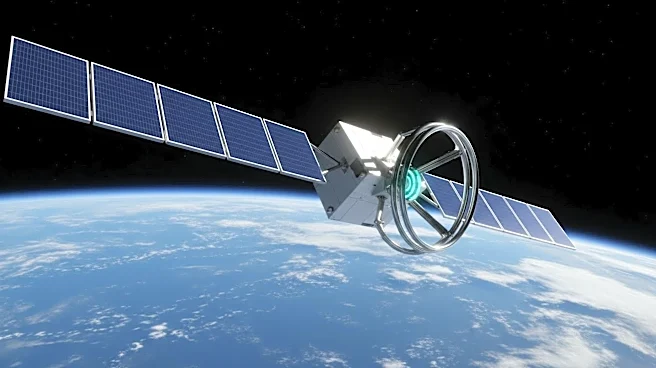
A British startup, Mass Balance, has launched a chemical experiment into orbit to study disease-causing proteins under microgravity conditions. The grapefruit-sized apparatus, containing chemicals and sensors, was sent into space aboard a SpaceX transporter.
The experiment aims to provide high-quality data on proteins that are difficult to study on Earth due to gravity-related effects like convection and sedimentation. This research could be crucial for understanding proteins linked to age-related diseases such as Alzheimer's and Parkinson's. The startup hopes to use the data to train AI models for better drug development.
Why It's Important?
The use of microgravity environments for scientific research represents a significant advancement in biotechnology. By studying proteins in space, researchers can gain insights that are not possible on Earth, potentially leading to breakthroughs in treating age-related diseases. This approach could revolutionize drug discovery and development, offering new avenues for pharmaceutical companies to explore. The success of this mission could encourage more biotech firms to invest in space-based research, expanding the scope of scientific inquiry and innovation.