






What's Happening?
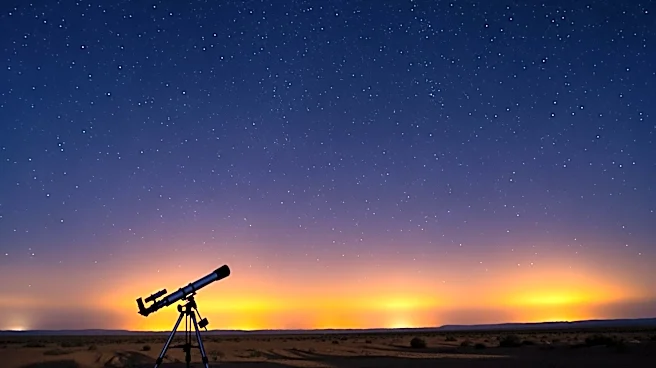
In Chile's Atacama Desert, renowned for its clear night skies, astronomers are raising alarms over potential threats from light pollution. The desert, home to some of the world's largest astronomical projects, offers unique conditions for stargazing due
to its dry climate, high altitude, and isolation from urban light. However, a recent proposal for a green power complex near the Paranal Observatory, managed by the European Southern Observatory, highlighted the vulnerability of these skies. Although the project was canceled after significant opposition from the scientific community, concerns remain about the adequacy of existing sky preservation laws. Efforts are underway to review and strengthen regulations to protect these vital astronomical sites.
Why It's Important?
The Atacama Desert's pristine skies are crucial for astronomical research, providing a window into the universe that is unmatched globally. The potential for increased light pollution threatens not only the scientific community's ability to conduct research but also the broader understanding of space and our place in it. The cancellation of the green power project underscores the tension between development and environmental preservation. Strengthening regulations could safeguard these skies, ensuring that future projects do not compromise the desert's unique conditions. The outcome of these regulatory reviews could set a precedent for balancing technological advancement with environmental conservation.
What's Next?
Following the cancellation of the green power project, Chilean authorities are reviewing environmental regulations to better protect astronomical zones. The scientific community is advocating for stricter criteria to prevent future projects from impacting these areas. The outcome of these reviews will be crucial in determining the future of astronomical research in the Atacama Desert. Stakeholders, including international organizations and local authorities, are expected to collaborate on developing comprehensive guidelines that balance development with the preservation of the night sky.
Beyond the Headlines
The situation in the Atacama Desert highlights broader issues of environmental conservation in the face of industrial and technological expansion. The need for updated regulations reflects a growing awareness of the impact of human activities on natural resources. This case also emphasizes the importance of international cooperation in preserving global scientific assets. As the demand for renewable energy grows, finding sustainable solutions that do not compromise critical research environments will be essential.