
What's Happening?
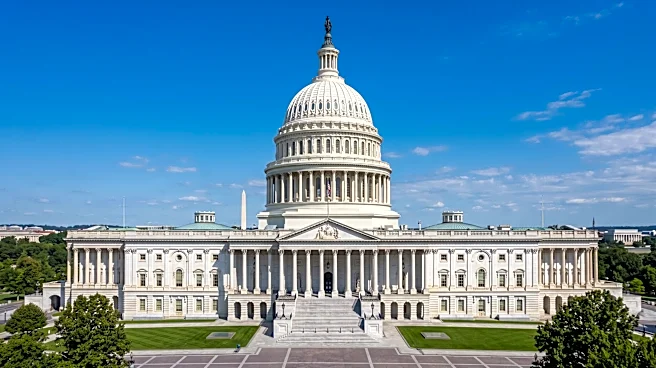
Democratic Congressman Maxwell Frost of Orlando has introduced bipartisan legislation aimed at overhauling the air supply systems in commercial aircraft. The proposed bill seeks to mandate filters on existing
bleed-air systems and eventually phase out their use entirely. Co-sponsored by Representatives Mike Lawler and John Garamendi, the legislation addresses concerns about 'fume events,' where engine oil and other potentially toxic particles can enter cabin air if engine seals fail. Flight attendants, such as Cher Taylor, have reported severe health issues, including permanent lung damage, which they attribute to repeated exposure to these fumes. While the official description of the bill on GovInfo indicates a phase-out in 'certain aircraft,' some reports suggest Frost's proposal aims to eliminate bleed-air systems in all commercial aircraft. The frequency of these fume events is a point of contention, with various reports citing occurrences ranging from less than one in 30,000 flights by the FAA to more than three times a day according to a CBS News review.
Why It's Important?
This legislation is significant for public health and aviation safety, directly impacting millions of passengers and flight crews in the U.S. The potential for toxic air exposure in aircraft cabins raises serious health concerns, as evidenced by reports of flight attendants experiencing acute asthma, reactive airway disease, and emergency room visits due to fume events. If passed, the bill could lead to substantial changes in aircraft design and maintenance protocols, potentially increasing operational costs for airlines but improving air quality and safety for those on board. The discrepancy in reported fume event frequencies highlights a long-standing issue of data collection and transparency within the aviation industry, which this legislation could force to address. Resolving this issue could restore public confidence in air travel safety and establish clearer standards for cabin air quality.
What's Next?
The proposed legislation will now proceed through the congressional process, requiring committee review, potential amendments, and votes in both the House and Senate. If passed, the Federal Aviation Administration (FAA) would be tasked with issuing regulations to implement the phase-out of bleed-air systems and the installation of filters. This could involve extensive research, development, and testing of new air supply technologies, such as those used in the Boeing 787 Dreamliner, which utilizes electric compressors instead of bleed-air. Airlines would face the challenge of retrofitting existing fleets or accelerating the adoption of newer aircraft models. Stakeholders, including airline industry groups, flight attendant unions, and public health advocates, are expected to engage actively in the legislative and regulatory processes, advocating for their respective interests regarding safety, cost, and implementation timelines.
Beyond the Headlines
The debate over bleed-air systems touches upon broader issues of corporate responsibility, regulatory oversight, and the long-term health impacts of occupational hazards. The differing statistics on fume event frequency underscore a systemic challenge in accurately monitoring and reporting incidents that could have significant health implications. This legislative push could prompt a re-evaluation of how health and safety data are collected and shared across industries, potentially leading to more robust reporting mechanisms and greater transparency. Furthermore, it highlights the ongoing tension between technological innovation, economic considerations for industries, and the imperative to protect public well-being. The outcome of this legislative effort could set a precedent for how future health and safety concerns are addressed in complex technological environments.