

What's Happening?
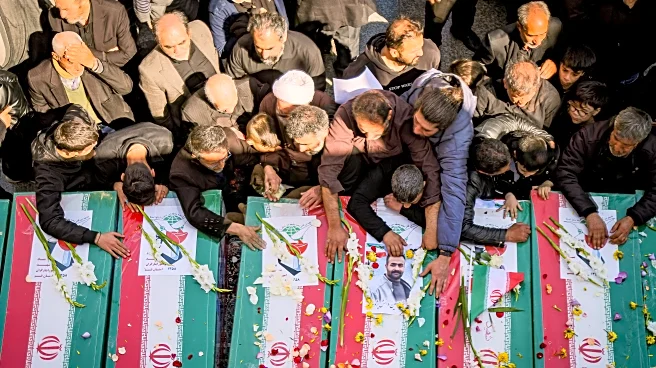
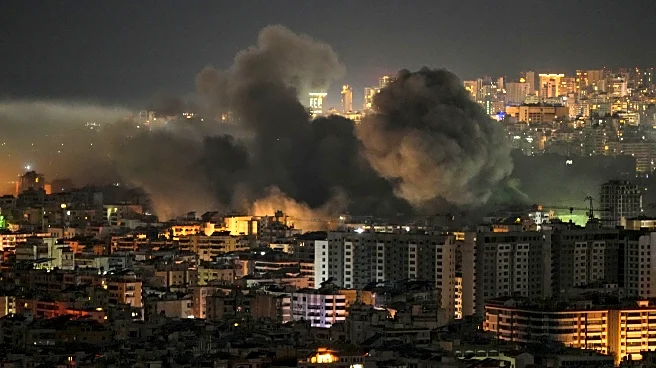
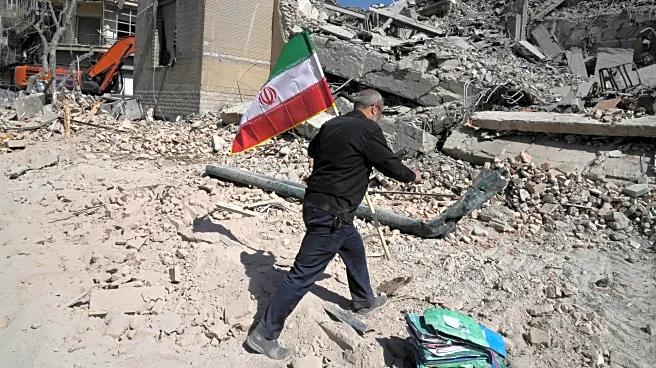
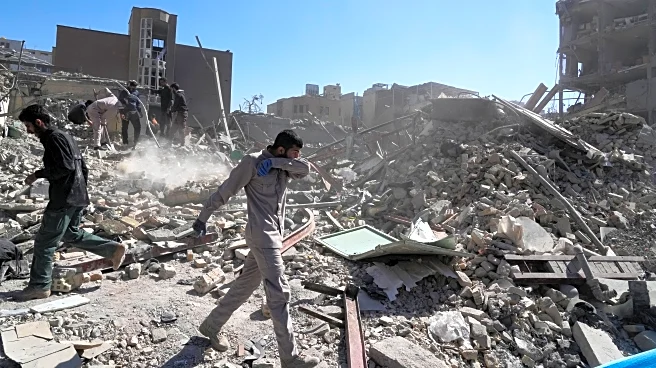
Israel has launched its most intense airstrikes in months targeting Hezbollah strongholds in Beirut, Lebanon. These strikes have resulted in the collapse of buildings and the displacement of thousands of people. The escalation is part of a broader regional
conflict involving Iran, which has seen tensions rise across the Middle East. The airstrikes are a response to perceived threats from Hezbollah, a group backed by Iran, which Israel considers a significant security threat. The situation has led to a humanitarian crisis, with many residents of Beirut forced to flee their homes in search of safety.
Why It's Important?
The intensification of Israeli airstrikes in Beirut highlights the ongoing volatility in the Middle East, with potential implications for regional stability. The displacement of thousands of people adds to the humanitarian challenges in Lebanon, a country already grappling with economic difficulties and a large refugee population. The conflict could further strain Lebanon's resources and exacerbate tensions between different political and ethnic groups within the country. Additionally, the involvement of Iran and Hezbollah in the conflict underscores the complex geopolitical dynamics at play, which could draw in other regional and international actors, potentially escalating the situation further.
What's Next?
The continuation of airstrikes and the potential for further military engagement could lead to increased international diplomatic efforts to de-escalate the situation. Humanitarian organizations may need to ramp up their efforts to provide aid to those displaced by the conflict. The Lebanese government, along with international partners, might seek to negotiate a ceasefire or peace talks to prevent further escalation. The international community will likely monitor the situation closely, with potential implications for foreign policy decisions by major powers involved in the region.