




What's Happening?
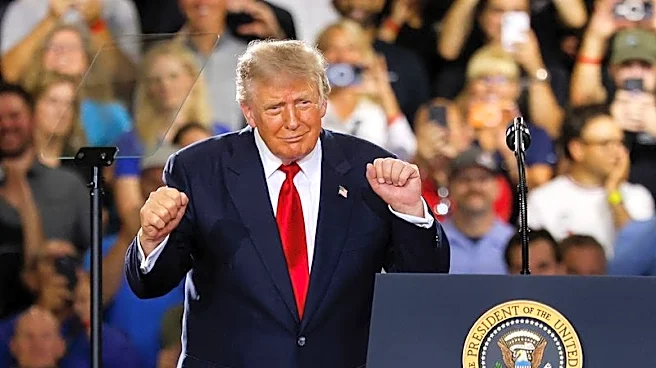
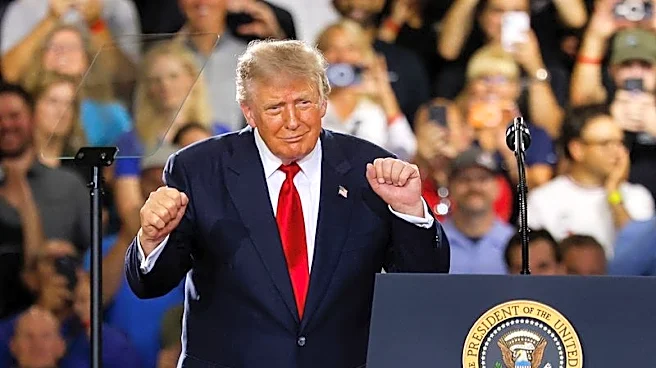
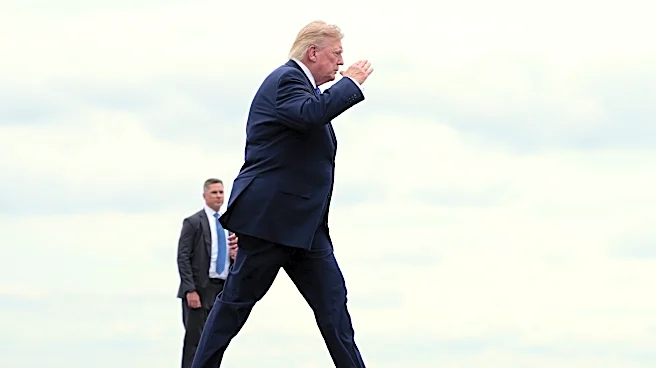
A recent Reuters/Ipsos poll indicates that President Trump's approval rating has decreased from 37% to 35%, nearing the lowest point of his second term. The disapproval rating has increased from 61% to 63%. The poll highlights a shift in public perception
regarding economic management, with the Democratic Party now seen as more capable of handling the economy than the Republican Party. This change is attributed to rising energy prices linked to the ongoing conflict with Iran, which has led to a significant increase in gasoline prices. The poll also suggests that Democrats hold a lead over Republicans in hypothetical scenarios for the upcoming legislative elections.
Why It's Important?
The decline in President Trump's approval rating reflects growing public dissatisfaction with his administration's handling of economic issues, particularly the impact of international conflicts on domestic energy prices. This shift in public opinion could influence the outcome of the upcoming legislative elections, potentially altering the balance of power in Congress. The perception of economic competence is crucial for political parties, and the Democrats' newfound advantage may bolster their electoral prospects. The poll results also underscore the importance of addressing economic challenges to maintain public support.
What's Next?
As the legislative elections approach, both parties are likely to intensify their efforts to address economic concerns and sway public opinion. The Trump administration may seek to implement measures to mitigate the impact of rising energy prices and improve economic conditions. Meanwhile, the Democratic Party will aim to capitalize on their perceived economic advantage to gain seats in Congress. The evolving political landscape will be closely monitored by stakeholders, including businesses and investors, who may adjust their strategies based on potential policy changes.