

What's Happening?
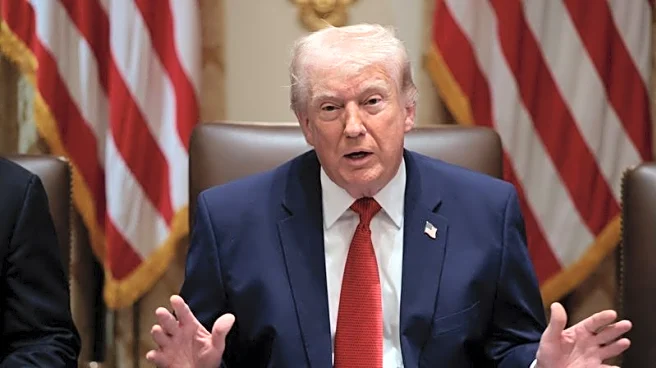
The United States and Israel have temporarily removed two Iranian officials, Parliamentary Speaker Mohammad-Bagher Ghalibaf and Foreign Minister Abbas Araghchi, from their list of targets for elimination. This decision comes as President Trump seeks to
open negotiations with Tehran, according to a report by the Wall Street Journal. The move is part of a broader strategy to explore peace talks, although Iran has rejected a ceasefire proposal from the US, labeling it as 'excessive.' Despite mediation efforts by Turkey, Pakistan, and Egypt, the likelihood of successful negotiations remains low due to significant differences in demands. The US has issued a warning to Iran, stating that failure to engage in talks will result in more severe military actions.
Why It's Important?
This development is significant as it highlights the ongoing tensions between the US, Israel, and Iran, and the potential for diplomatic resolutions amidst military strategies. The temporary removal of these officials from the target list suggests a possible shift towards negotiation, which could impact regional stability and international relations. The US's warning of intensified military action if talks fail underscores the high stakes involved. The outcome of these negotiations could influence US foreign policy and its approach to Middle Eastern conflicts, affecting global diplomatic and economic landscapes.
What's Next?
If Iran agrees to engage in negotiations, it could lead to a de-escalation of military actions and potentially pave the way for a new diplomatic framework. However, if talks do not materialize, the US and Israel may resume their targeted strategies, which could further destabilize the region. The international community will likely continue to monitor the situation closely, with potential implications for global security and economic interests.