



What's Happening?
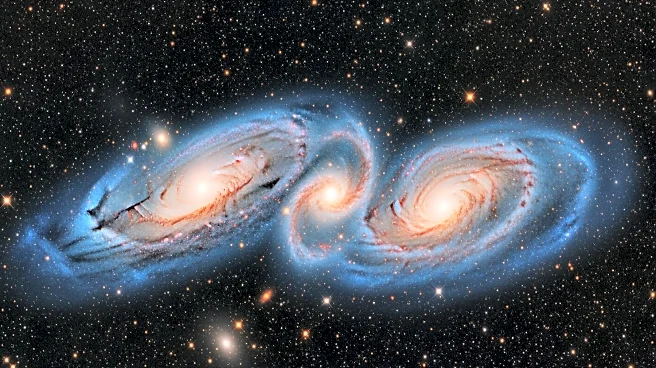
The James Webb Space Telescope (JWST), in collaboration with the Chandra X-ray Observatory, has captured a striking image of two colliding spiral galaxies, NGC 2207 and IC 2163, located 120 million light-years away in the constellation Canis Major. This
cosmic event, described as an 'intricate web of chaos,' is a result of the gravitational interaction between the two galaxies. The larger galaxy, NGC 2207, dominates the scene, while the smaller IC 2163 overlaps its outer regions. The gravitational forces are distorting the spiral arms of both galaxies, stretching streams of stars and gas, and compressing gas and dust, which can lead to the formation of new stars. The image combines infrared light from JWST and X-ray light from Chandra, highlighting different aspects of the galaxies' structures and energetic regions.
Why It's Important?
This observation is significant as it provides scientists with a clearer understanding of the dynamics involved in galaxy mergers, a common event in the universe that plays a crucial role in the evolution of galaxies. By studying these interactions, researchers can develop more accurate models of how galaxies form and evolve over time. The data from JWST and Chandra offer insights into the processes that trigger star formation and the behavior of high-energy regions within galaxies. This knowledge is essential for advancing our understanding of the universe's structure and the life cycle of galaxies.
What's Next?
Future observations and analyses of NGC 2207 and IC 2163 will likely focus on the detailed processes occurring within the galaxies' cores and spiral arms. Scientists aim to use this data to refine models of galaxy interactions and to explore the conditions that lead to star formation. The ongoing collaboration between JWST, Chandra, and other telescopes will continue to provide valuable data, enhancing our understanding of cosmic phenomena and contributing to the broader field of astrophysics.
Beyond the Headlines
The study of galaxy mergers like that of NGC 2207 and IC 2163 also has implications for understanding the history of our own Milky Way galaxy, which has undergone similar interactions in the past. These events can influence the distribution of stars and the overall structure of galaxies, offering clues about the past and future of our cosmic neighborhood. Additionally, the technological advancements represented by JWST and Chandra highlight the importance of international collaboration in space exploration and the pursuit of scientific knowledge.