


What's Happening?
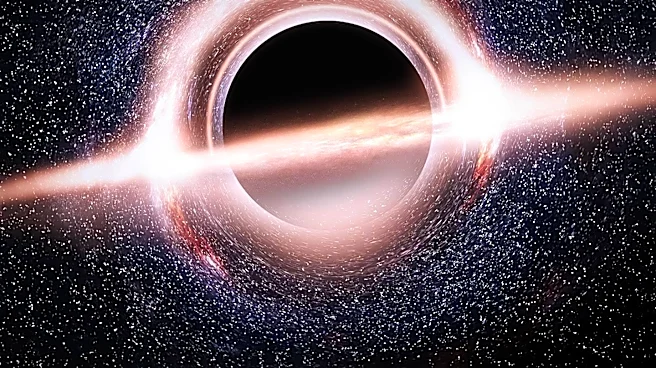
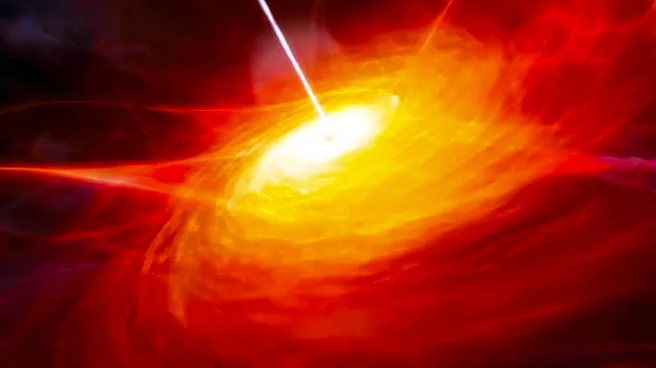
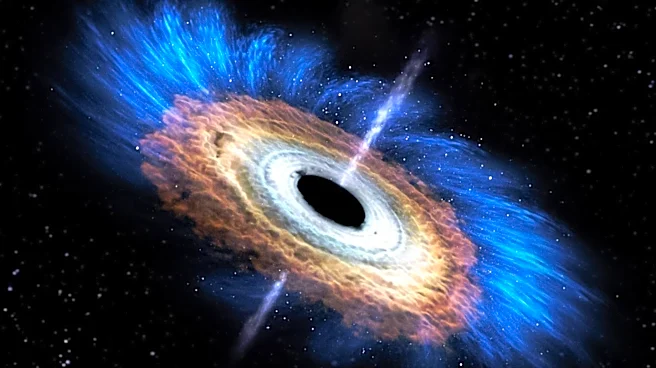
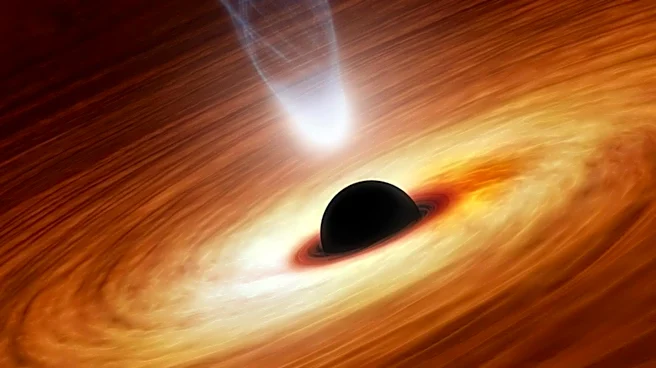
A new study led by astronomers Sanchayeeta Borthakur of Arizona State University (ASU) and Namrata Roy of the Raman Research Institute (RRI) provides evidence that narrow jets of extremely hot plasma, launched by supermassive black holes at the centers
of galaxies, can significantly influence gas far beyond the visible galaxy. These jets disturb the circumgalactic medium (CGM), an enormous reservoir of cold, dense gas surrounding galaxies, which is crucial for future star formation. The research, published in the Astrophysical Journal Letters, addresses a long-standing puzzle: why galaxies do not produce more stars despite being surrounded by abundant star-forming material. The team combined observations from hundreds of galaxies using data from the Dark Energy Spectroscopic Instrument (DESI) survey and radio jet measurements from the LOFAR Two-meter Sky Survey (LoTSS). They found that the H-alpha signal, indicating ionized hydrogen, was much stronger along the radio jets, suggesting a directional impact on the gas.
Why It's Important?
This discovery is crucial for understanding the long-term evolution of galaxies, including our own Milky Way. By demonstrating how supermassive black holes, despite their relatively small size, can exert influence across vast cosmic distances, the study reshapes our understanding of galactic dynamics. The disruption of the CGM by these jets can prevent gas from cooling and falling inward, thereby limiting the fuel available for new star formation. This mechanism acts as a brake on galaxy growth, potentially pushing galaxies towards a quiescent state with reduced star production. This has profound implications for the conditions necessary for life, as star formation directly leads to the creation of planets. The findings open new avenues for exploring the intricate connection between supermassive black holes and the development of galaxies, ultimately impacting the prevalence of star systems and potentially habitable worlds.
What's Next?
The findings provide astronomers and theorists with a new framework to test how black hole jets interact with galaxies and influence their evolution. Future research will likely focus on further characterizing the precise mechanisms by which these jets heat, stir, and disrupt the CGM. The directional nature of the H-alpha glow along the jets, as opposed to an isotropic distribution, suggests that previous studies might have missed these effects by averaging observations in all directions. This new understanding will guide future observational strategies, potentially leading to more targeted studies of galaxies with active black hole jets. The collaboration between large optical and radio surveys, such as DESI and LoTSS, will continue to be vital in revealing subtle patterns that are otherwise undetectable, allowing for a more comprehensive understanding of galactic processes.
Beyond the Headlines
The study highlights the profound and far-reaching influence of supermassive black holes, extending their impact far beyond their immediate vicinity to shape the destiny of entire galaxies. This challenges the traditional view of black holes as mere gravitational sinks, instead portraying them as active agents in cosmic evolution. The concept of a 'cosmic thermostat,' where black holes regulate star formation, gains stronger empirical support. This research also underscores the power of combining diverse astronomical datasets and advanced analytical techniques to uncover previously hidden phenomena. The ability to detect faint signals by aggregating data from hundreds of galaxies demonstrates a sophisticated approach to overcoming observational limitations, pushing the boundaries of what can be learned from the distant universe. This deeper understanding of galactic evolution could also inform theories about the distribution of life-supporting planets across the cosmos.