





What's Happening?
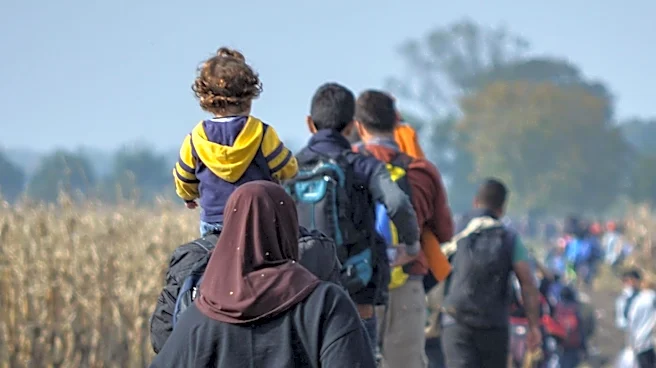
Action Against Hunger, with funding from the European Union, is providing mental health and protection services to displaced individuals in Haiti. Widespread insecurity in the country has led to significant displacement, deepening psychological trauma
and increasing risks of hunger, violence, and exploitation, particularly for women and children. The organization's programs are integrated into displacement sites and semi-rural communities in Port-au-Prince and Artibonite. A 2024 UN Women assessment highlighted that nearly 70% of displaced women and girls reported psychological distress, yet only 10% had access to health services. Action Against Hunger's initiatives aim to address this critical gap by offering emotional stabilization sessions and community activities. For instance, Rosanita, a woman displaced from Port-au-Prince, experienced a significant reduction in psychological distress and an increase in social support after participating in these programs.
Why It's Important?
The provision of mental health and protection services in Haiti is crucial due to the severe humanitarian crisis exacerbated by widespread insecurity and gang violence. The displacement of 1.5 million people has not only resulted in loss of homes and livelihoods but also profound psychological trauma. Without adequate mental health support, displaced populations, especially vulnerable groups like women and children, face long-term consequences including chronic distress, social isolation, and increased susceptibility to further exploitation. The efforts by Action Against Hunger, supported by the European Union, are vital in helping individuals rebuild their sense of safety, reconnect with communities, and cope with trauma. This support is essential for fostering resilience and enabling displaced persons to move forward, contributing to the overall stability and recovery of affected communities in Haiti.
What's Next?
Action Against Hunger plans to continue and potentially expand its mental health and psychosocial support (MHPSS) and protection programs in Haiti, contingent on ongoing funding and the evolving security situation. The organization's current success, with 74% of participants experiencing improved well-being and 60% reduced psychological distress, indicates the effectiveness of these interventions. Future steps will likely involve sustained efforts to integrate these services into humanitarian responses, ensuring that mental health support remains a priority alongside immediate needs like food and water. Continued collaboration with international partners, such as the European Union, will be critical for securing the necessary resources to reach more displaced individuals and communities affected by the crisis. The long-term goal is to help more people like Rosanita heal from trauma and rebuild their lives.
Beyond the Headlines
The mental health crisis among displaced populations in Haiti underscores a broader, often overlooked, aspect of humanitarian emergencies: the profound psychological toll of conflict and displacement. Beyond the immediate physical needs, the loss of community, safety, and support systems can lead to deep-seated trauma that impacts individuals for years. This situation highlights the ethical imperative for humanitarian aid to encompass comprehensive mental health and psychosocial support as a core component of its response. The success of programs like Action Against Hunger's demonstrates that addressing mental health is not merely a supplementary service but a fundamental element for recovery and resilience. It also points to the need for increased global awareness and funding for mental health initiatives in crisis zones, recognizing that healing from trauma is as critical as providing food and shelter for long-term stability and human dignity.