



What's Happening?
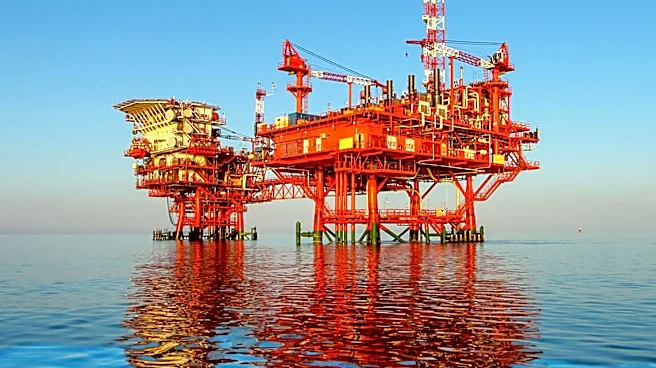
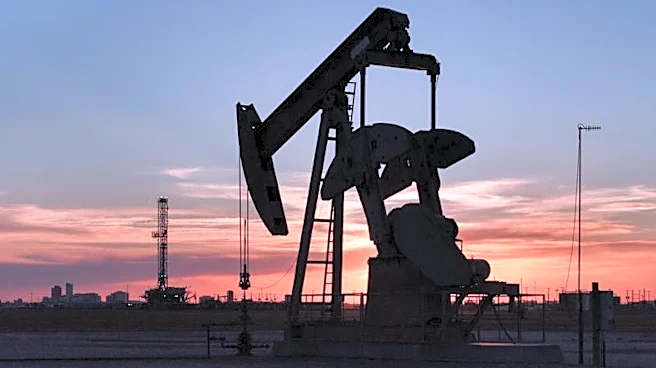
A new report from the E3G think tank indicates that the global transition away from oil will likely lead to significant conflict, migration, and economic upheaval, particularly affecting countries heavily reliant on oil revenues. Nations such as Nigeria,
Iran, Angola, and Algeria are identified as highly vulnerable due to their strong dependence on oil for government income and public services, coupled with limited economic diversification and insufficient capital to manage the transition. The report, compiled over two years through various scenario war-gaming exercises with over 100 public servants and experts, highlights that oil use is already declining in many countries due to the rise of renewable energy and the impact of the Iran war, which has constrained supply and driven up prices. Global oil demand is projected to plateau in the coming decade, with a peak expected in the early 2030s, forcing producers to compete for a shrinking market. The cheapest producers with abundant resources, like Saudi Arabia and the United Arab Emirates, are expected to fare better than those with less advanced infrastructure.
Why It's Important?
This impending global shift carries significant implications for international stability and security, including potential spillover effects into the Gulf region. The fragility of oil-producing nations, if left unaddressed, could escalate into a global security risk, impacting U.S. foreign policy and economic interests. The report underscores that 17 countries worldwide derive over 40% of their government revenue from oil, with some, like Iraq and Libya, relying on it for 70% to 90%. The projected rapid decline in revenue from 2030, with Algeria potentially facing an 87% drop and Nigeria over 60%, will create substantial gaps in funding basic services, destabilizing social structures and increasing debt burdens. This could lead to widespread unrest and migration, particularly in regions critical to global energy supply and geopolitical balance. The U.S. and its allies may face increased demands for humanitarian aid, peacekeeping efforts, and diplomatic interventions to manage the fallout from these fiscal crises.
What's Next?
Governments and international organizations, including the International Monetary Fund and the World Bank, are urged to collaborate urgently to mitigate the anticipated consequences. The report emphasizes that existing toolkits for managing such transitions are fragmented and need to be integrated across policy areas. Major oil-consuming nations are called upon to coordinate and communicate their future demand more clearly, incorporating adjustment strategies into their foreign and economic security policies, not just development assistance or climate policy. Without proactive measures, the transition could become chaotic and destabilizing, potentially triggering a series of national fiscal crises that evolve into diverse security problems, such as unrest and migration in Algeria, increased instability in Iraq with regional spillover, weakened state capacity in Nigeria, and military competition over oil infrastructure in Libya, posing heightened security risks for Europe and the U.S. The role of countries like India, whose future oil demand is uncertain, will be pivotal in determining the pace of global demand decline.
Beyond the Headlines
The report delves into the deeper ethical and strategic dimensions of the energy transition, highlighting that delaying or slowing the transition is not a viable option given the accelerating climate crisis. Instead, it advocates for a managed, coordinated transition to prevent a 'slow but chaotic' outcome that could be as destabilizing as a rapid one. The findings challenge the denial prevalent among many oil producers regarding the necessary pace and scale of demand and supply reduction. The potential for high-cost producers, such as those in the North Sea, to become economically unviable as demand falls sharply, underscores the need for comprehensive economic restructuring and diversification strategies. The report implicitly calls for a re-evaluation of international aid and development frameworks to specifically address the unique challenges faced by oil-dependent economies during this global energy shift, transforming it from a purely environmental issue into a critical component of global security and economic stability.