








What's Happening?
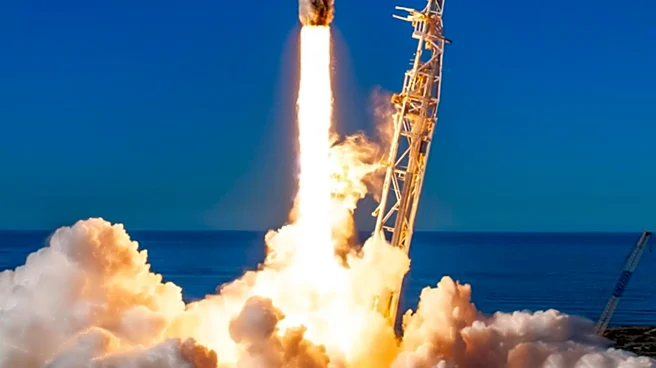
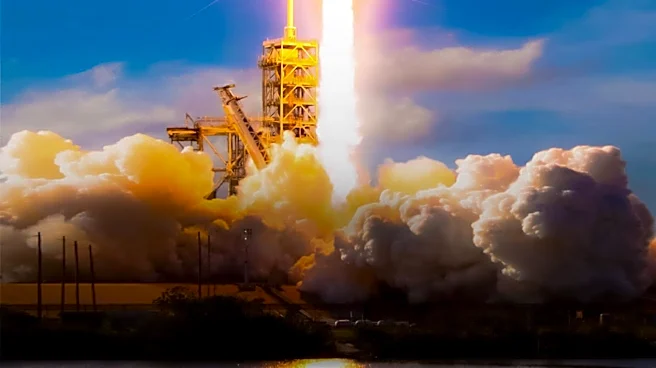
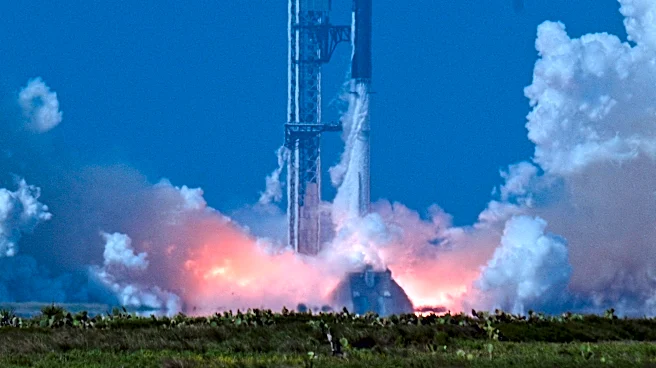
NASA has announced a change in the launch vehicle for its SunRISE (Sun Radio Interferometer Space Experiment) mission, which will now be launched aboard a SpaceX Falcon Heavy rocket. Originally set to launch on a United Launch Alliance Vulcan Centaur
vehicle, the mission will take off from Kennedy Space Center in Florida. SunRISE consists of six small satellites, known as SmallSats, which will work together as a large radio telescope to track solar radio bursts. These bursts, generated by energetic particles from the Sun, can pose risks to satellites and astronauts. The mission aims to improve prediction and mitigation of these solar events. The SmallSats have been assembled and tested at Utah State University’s Space Dynamics Laboratory and will be stored until the launch date is confirmed.
Why It's Important?
The SunRISE mission is significant for its potential to enhance the understanding and prediction of solar energetic particle events, which can have serious implications for satellite operations and astronaut safety. By tracking solar radio bursts, SunRISE could provide early warnings of solar storms, allowing for better preparation and protection of space assets. This mission also highlights the growing collaboration between NASA and commercial space companies like SpaceX, which could lead to more cost-effective and flexible space exploration strategies. The use of SmallSats in this mission exemplifies a trend towards utilizing smaller, more agile spacecraft for scientific research.
What's Next?
NASA will announce the updated launch timing for the SunRISE mission in the near future. As the mission progresses, it will be crucial to monitor the performance of the SmallSats in tracking solar radio bursts and their effectiveness in improving solar event predictions. The success of this mission could influence future heliophysics missions and the development of new technologies for space weather forecasting. Additionally, the collaboration with SpaceX may pave the way for further partnerships in upcoming NASA missions.