
What's Happening?
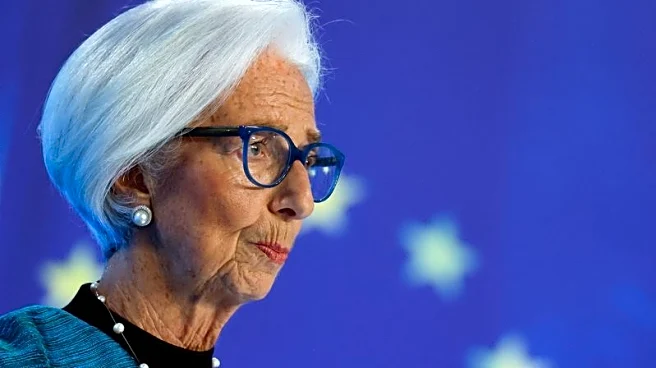
Christine Lagarde, President of the European Central Bank (ECB), has indicated that the ECB is likely to raise its growth forecasts in December. This follows a previous increase in September, where the annual
GDP growth prediction was adjusted to 1.2%. The ECB's final policy meeting of the year is expected to maintain interest rates at 2%. This comes as Eurozone industrial production has shown a 0.8% increase, marking the first consecutive months of expansion since March. The ECB's decision is part of a broader context of central bank actions across Europe, with the Bank of England, Riksbank, and Norges Bank also holding their final monetary policy decisions for the year.
Why It's Important?
The potential adjustment in growth forecasts by the ECB reflects a cautiously optimistic outlook on the Eurozone's economic recovery. Maintaining steady interest rates at 2% suggests a balanced approach to fostering growth while managing inflation. This decision is significant for U.S. investors and businesses with interests in Europe, as it may influence market stability and investment strategies. Additionally, the ECB's actions could impact the global economic landscape, affecting trade and financial markets. The broader implications for the U.S. include potential shifts in currency exchange rates and international trade dynamics.
What's Next?
The ECB's upcoming policy meeting will be closely watched for any changes in economic forecasts and interest rate decisions. European leaders are also set to address funding for Ukraine at a summit in Brussels, which could involve the use of frozen Russian assets. These developments may have geopolitical and economic repercussions, influencing international relations and financial markets. Stakeholders, including investors and policymakers, will be monitoring these events to assess their impact on economic conditions and strategic decisions.