






What's Happening?
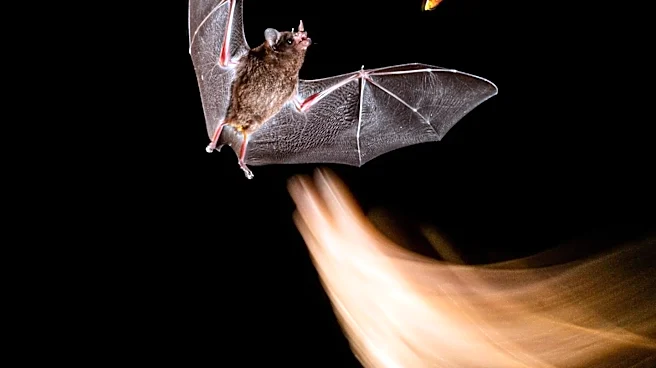
Nebraska Wildlife Rehab, a wildlife rescue service based in Omaha, has announced the discovery of a bat species previously undocumented in Nebraska. The bat, identified as a female cave myotis, was found on the floor of an Omaha office building. Individuals
who located the bat contacted the Nebraska Humane Society Animal Control, which then transported the animal to Nebraska Wildlife Rehab. Cave myotis bats are native to the western and southwestern United States and extend into Mexico. This finding represents the first recorded instance of this particular species in the state of Nebraska. Wildlife officials suspect the bat may have traveled to Nebraska by stowing away in a shipment, car, or freight.
Why It's Important?
The discovery of a cave myotis bat in Nebraska holds significant importance for wildlife conservation and ecological studies in the region. The presence of a species outside its known native range can indicate shifts in animal migration patterns, potentially influenced by factors such as climate change, habitat disruption, or accidental transportation through human activity. For Nebraska, this event expands the known biodiversity of the state and prompts further investigation into how such species might adapt to new environments or impact local ecosystems. Understanding the pathways through which non-native species arrive is crucial for developing strategies to monitor and manage wildlife populations, preventing potential ecological imbalances, and protecting native species from competition or disease. This incident highlights the interconnectedness of ecosystems and the role of human infrastructure in facilitating species movement.
What's Next?
Following this discovery, Nebraska Wildlife Rehab and other wildlife authorities will likely continue to monitor for additional sightings of the cave myotis bat in Nebraska to determine if this was an isolated incident or if a broader range expansion is occurring. Researchers may also investigate the specific genetic lineage of the bat to trace its origin more precisely and understand its journey. Educational outreach to the public about reporting unusual wildlife sightings could be enhanced to aid in early detection of other non-native species. Furthermore, transportation and logistics companies might be encouraged to implement measures to prevent accidental wildlife stowaways, especially for species that could pose ecological risks if they establish populations in new areas. The incident could also spur new research into the adaptability of cave myotis bats to different climates and environments.
Beyond the Headlines
This unusual discovery in Omaha underscores the subtle yet profound ways human infrastructure and global trade can influence natural ecosystems. The accidental transport of a bat from Mexico to Nebraska highlights the concept of 'anthropogenic dispersal,' where human activities inadvertently facilitate the movement of species across geographical barriers. While this particular bat's arrival might be an isolated event, it serves as a microcosm of larger trends in biodiversity redistribution, which can have long-term implications for ecological balance, agricultural health, and even public health if new pathogens are introduced. The incident also raises ethical considerations regarding human responsibility in preventing the unintended spread of species and the need for robust wildlife monitoring systems to adapt to an increasingly interconnected world. It challenges the traditional understanding of species ranges and emphasizes the dynamic nature of ecosystems in the Anthropocene.