





What's Happening?
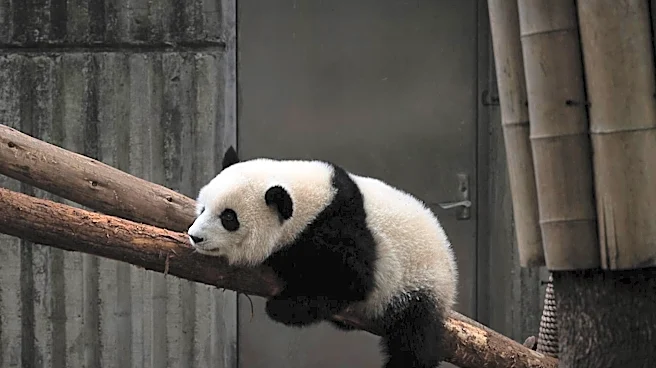
Tokyo's Ueno Zoological Gardens is scheduled to begin the demolition of its East Garden panda enclosure on Monday. This enclosure, constructed in 1988, has been home to ten giant pandas over several decades, including the popular Xiang Xiang, who was
transferred to China in 2023. Currently, the zoo does not house any pandas, as the twin pandas Xiao Xiao and Lei Lei, who resided in the West Garden, were also relocated to China in January. Many visitors came to the zoo on Sunday to commemorate the enclosure, taking photos with toy pandas and viewing panels that displayed information about its former residents. The demolition work is projected to continue until February 2027. The Tokyo Metropolitan Government has not yet determined the future use of the site once the demolition is complete. However, the enclosure located in the West Garden will be maintained, preserving the option for pandas to return to the zoo in the future.
Why It's Important?
The demolition of the Ueno Zoo's East Garden panda enclosure marks the end of an era for a significant cultural landmark in Tokyo. For decades, the zoo's pandas have been a major attraction, drawing large crowds and fostering a deep connection with the public. The absence of pandas at the zoo, following the relocation of its last residents, signifies a temporary void in its animal collection and a shift in its visitor experience. The decision to demolish the aging enclosure, rather than renovate it, suggests a long-term strategic planning process by the Tokyo Metropolitan Government regarding the zoo's infrastructure and future exhibits. The preservation of the West Garden enclosure indicates a continued commitment to potentially reintroducing pandas, highlighting their enduring popularity and importance to the zoo's appeal. This event reflects broader trends in zoological park management, where older facilities are being updated or replaced to meet modern animal welfare standards and visitor expectations.
What's Next?
The demolition of the East Garden panda enclosure is set to commence on Monday and is expected to be a lengthy process, concluding in February 2027. During this period, the site will be an active construction zone, and public access will likely be restricted. The Tokyo Metropolitan Government will need to decide on the future utilization of the cleared land, which could involve developing new exhibits, expanding existing facilities, or repurposing the space for other zoo-related functions. While there are no immediate plans for new pandas, the preservation of the West Garden enclosure suggests that the zoo remains open to the possibility of housing giant pandas again. This would likely involve negotiations with Chinese authorities, as pandas are typically loaned from China. The zoo's deputy head, Kaneko Mikako, expressed a desire to care for pandas again, indicating internal interest in their return. Future developments will depend on these governmental decisions and international agreements.
Beyond the Headlines
The demolition of the panda enclosure at Ueno Zoo extends beyond a simple structural removal; it symbolizes a transition in the zoo's identity and its relationship with its visitors. Pandas, often seen as symbols of conservation and international goodwill, have played a crucial role in attracting tourism and fostering public engagement with wildlife. The emotional responses from visitors, who shared memories and expressed hopes for the pandas' return, underscore the deep cultural and emotional attachment people form with these animals. This event also highlights the complex logistics and diplomatic efforts involved in maintaining giant panda populations in zoos outside of China. The decision to preserve the West Garden enclosure reflects a strategic foresight, acknowledging the potential for future panda diplomacy and the significant public interest that these animals generate. It also raises questions about the evolving role of zoos in conservation, education, and entertainment in a rapidly changing world.