



What's Happening?
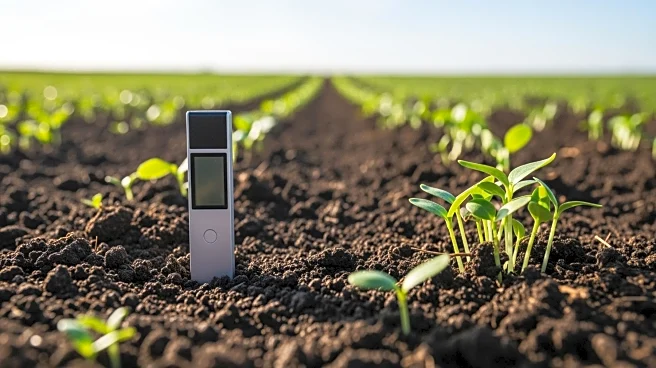
Tehran University has launched three innovative smart agriculture systems aimed at significantly reducing water consumption and enhancing crop efficiency. These systems focus on irrigation management, greenhouse automation, and crop monitoring, utilizing
local sensors and satellite data to gather environmental information. This data is then processed by a central control unit to optimize plant growth conditions while minimizing resource use. The university reports that this method has already achieved up to 23% water savings for various organizations. Additionally, the greenhouse automation technology offers automated irrigation and pesticide application, tailored to specific plant needs and regional conditions, resulting in a 63% increase in production efficiency. Tehran University plans to collaborate with Russia on a joint production line for these systems, indicating a move towards international cooperation in agricultural innovation.
Why It's Important?
The introduction of these smart agriculture systems is crucial as it addresses the pressing issue of water scarcity, a significant challenge in agriculture. By optimizing water use and improving crop efficiency, these systems can potentially transform agricultural practices, leading to more sustainable farming. This development is particularly relevant for regions facing water shortages, as it offers a viable solution to conserve water while maintaining or even increasing agricultural output. The collaboration with Russia also highlights the potential for international partnerships in advancing agricultural technology, which could lead to broader adoption and further innovations in the field.
What's Next?
Tehran University's collaboration with Russia on a joint production line for these smart systems suggests a future expansion of this technology beyond Iran. This partnership could lead to the development of more advanced systems and their implementation in other countries facing similar agricultural challenges. Additionally, the success of these systems may encourage other nations to invest in smart agriculture technologies, potentially leading to a global shift towards more sustainable farming practices. Stakeholders such as government agencies, environmental organizations, and agricultural businesses may closely monitor these developments to assess their applicability and benefits.