




What's Happening?
The Trump administration has announced a plan to eliminate 702 existing federal regulations as part of its ongoing efforts to reduce government red tape. This initiative marks a record number of deregulatory actions under consideration, doubling the number from
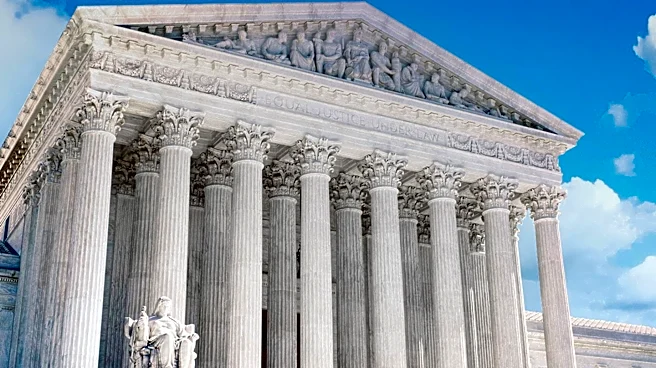
President Trump's first term. The administration projects $1.5 trillion in economic savings from these cuts, which include repealing environmental review requirements and energy efficiency standards. The plan also involves new regulations, such as a 'public charge' rule affecting undocumented immigrants and expanded background checks for foreign nationals in transportation. The Supreme Court recently ruled that the president can remove agency heads at will, further centralizing regulatory control under the White House.
Why It's Important?
This regulatory overhaul could have significant implications for various sectors, including energy, environment, and immigration. The projected economic savings are substantial, but critics argue that the analysis may not fully account for the benefits of existing regulations. The centralization of regulatory authority under the White House could lead to more streamlined decision-making but also raises concerns about the potential loss of agency independence. The changes could impact businesses, consumers, and environmental policies, with potential long-term effects on public health and safety.
What's Next?
The administration aims to meet its deregulatory goals by the end of the fiscal year, with a full accounting of actions expected afterward. Stakeholders, including businesses, environmental groups, and policymakers, will likely respond to these changes, potentially leading to legal challenges or calls for legislative action. The impact of these regulatory cuts will be closely monitored, particularly in terms of economic savings and effects on public welfare. The administration's approach to regulation will continue to be a key area of focus in President Trump's second term.