



What's Happening?
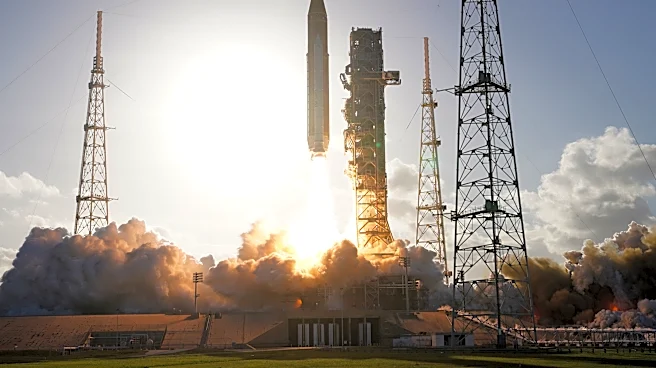
NASA has successfully launched the Artemis 2 mission, marking the first crewed lunar flight since 1972. The mission took off from Kennedy Space Center in Florida and is a significant step in NASA's efforts to return humans to the Moon. Artemis 2 is part
of NASA's broader Artemis program, which aims to establish a sustainable human presence on the Moon and eventually pave the way for human exploration of Mars. The mission includes a crew of astronauts who will orbit the Moon, testing systems and procedures for future lunar landings.
Why It's Important?
The Artemis 2 mission represents a major milestone in space exploration, as it revives human lunar exploration after more than five decades. This mission is crucial for testing new technologies and systems that will be used in future lunar landings and long-duration space missions. It also demonstrates international collaboration and technological advancements in space travel. The success of Artemis 2 could inspire renewed interest in space exploration and science, potentially leading to new discoveries and innovations.
What's Next?
Following the successful launch of Artemis 2, NASA will focus on the next phases of the Artemis program, which include landing astronauts on the lunar surface with Artemis 3. The data and experience gained from Artemis 2 will inform the planning and execution of these future missions. Additionally, NASA will continue to work with international partners and private companies to develop the infrastructure needed for sustained lunar exploration and eventual missions to Mars.