




What's Happening?
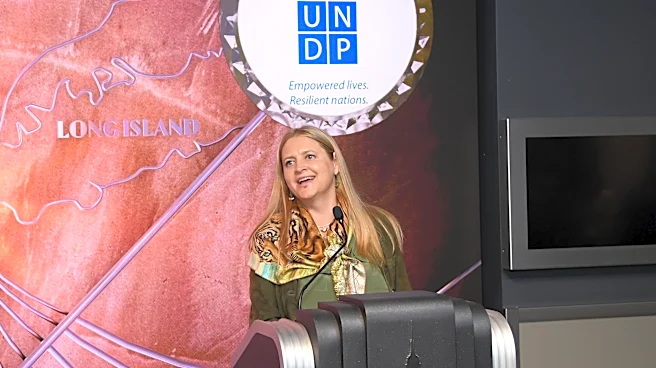
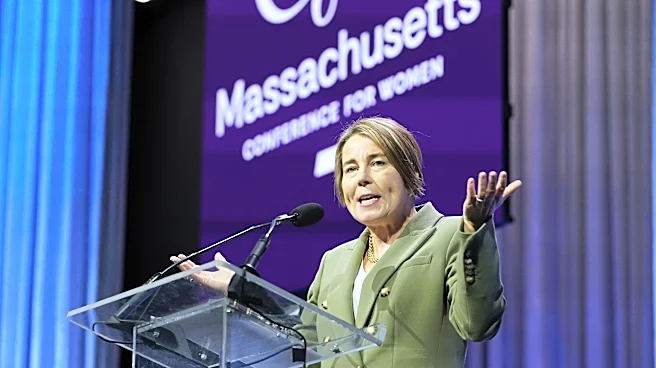
Governor Maura Healey has announced the appointment of Aladdine Joroff as Massachusetts' new climate chief. Joroff, who previously served as the deputy in the Governor's Office of Climate Innovation and Resilience for the past two years, will succeed
Melissa Hoffer, who is departing to become president of Vermont Law and Graduate School on December 1. Hoffer was the first Cabinet-level climate chief in Massachusetts. Joroff joined Governor Healey's administration in August 2024, having previously been the director of climate policy for Boston. Her background also includes a decade of teaching at Harvard Law School's Emmett Environmental Law and Policy Clinic, where she collaborated with Massachusetts municipalities, nonprofits, and advocacy groups on environmental and climate issues. Earlier in her career, Joroff practiced environmental, energy, and land use law at Goodwin and Beveridge & Diamond. The climate chief position, established by an executive order signed by Governor Healey on her first day in office, designates the role as the principal policy advisor and primary representative of the Governor on all climate-related matters, leading policy development and implementation across executive department agencies.
Why It's Important?
This appointment is significant for Massachusetts as it signals a continuation of the state's commitment to addressing climate change and advancing environmental initiatives. The climate chief plays a crucial role in shaping and executing policies related to climate innovation, mitigation, adaptation, and resilience across all state agencies. Joroff's extensive experience in climate policy at both the municipal and state levels, coupled with her legal and academic background in environmental law, positions her to drive the state's climate agenda forward. Her leadership will be vital in developing strategies to help communities prepare for severe weather events, promote clean energy solutions, and foster job creation in the green sector. The continuity in leadership, with Joroff moving from deputy to chief, suggests a stable transition and a sustained focus on the climate goals set by Governor Healey's administration. This role is central to Massachusetts' efforts to reduce its carbon footprint and build resilience against the impacts of a changing climate, potentially influencing other states' approaches to similar challenges.
What's Next?
Aladdine Joroff will officially assume her role as climate chief following Melissa Hoffer's departure on December 1. Her immediate tasks will likely involve reviewing existing climate policies and initiatives, identifying areas for accelerated action, and collaborating with various state departments to ensure a cohesive approach to climate goals. Expect Joroff to focus on implementing strategies that align with Governor Healey's vision for climate innovation, including further development of clean energy infrastructure and programs aimed at community resilience. She will also likely engage with local municipalities, environmental organizations, and industry stakeholders to gather input and build consensus on key climate initiatives. The administration will likely highlight new projects or policy proposals under Joroff's leadership, particularly those that aim to lower energy costs and create green jobs. Her tenure will be closely watched for progress on Massachusetts' ambitious climate targets and its role as a leader in environmental policy.
Beyond the Headlines
The appointment of a dedicated climate chief underscores a broader trend in U.S. state governance towards institutionalizing climate action at the highest levels. By creating a Cabinet-level position, Massachusetts signals that climate change is not merely an environmental issue but a cross-cutting concern impacting economic development, public health, and infrastructure. This approach integrates climate considerations into all facets of state policy, moving beyond siloed environmental departments. Joroff's background, spanning legal, academic, and governmental roles, highlights the multidisciplinary expertise now required to tackle complex climate challenges. This move could also serve as a model for other states looking to enhance their climate governance structures, emphasizing the importance of a centralized, high-level authority to coordinate efforts. The focus on both mitigation (reducing emissions) and adaptation (preparing for climate impacts) reflects a comprehensive understanding of the climate crisis, acknowledging the need for both long-term solutions and immediate resilience-building measures.