
What's Happening?
The State Bank of Pakistan (SBP) has released its performance report for the fiscal year 2024-25, highlighting significant challenges in the agriculture sector. The report, presented in Parliament, reveals
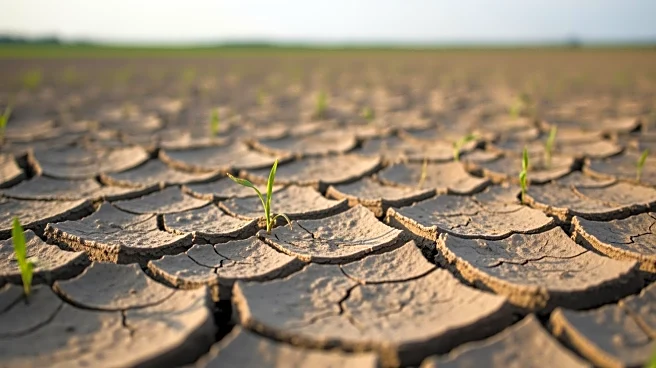
that agricultural growth plummeted from 6.4% in 2024 to just 1.5% in 2025. This decline has severely impacted the sector's contribution to the national GDP, which fell from 1.5% to 0.4%. The report attributes this downturn to adverse weather conditions, financial constraints, and policy uncertainties. Key crops like wheat and cotton have seen reduced production and cultivation areas. The report also notes the government's non-procurement of wheat and market-based price determination as factors contributing to farmer uncertainty. Additionally, the continuous decline in cotton production over the past decade is linked to poor-quality seeds and climate change effects.
Why It's Important?
The decline in Pakistan's agriculture sector is critical as it directly affects food security and the livelihoods of millions of farmers. Agriculture is a significant part of Pakistan's economy, and its downturn could lead to increased food prices and economic instability. The report underscores the need for policy stability and financial support to revitalize the sector. The challenges faced by Pakistani farmers, such as climate change and financial constraints, are reflective of broader global agricultural issues. The situation calls for urgent reforms and the adoption of climate-resilient practices to ensure sustainable food production and economic stability.
What's Next?
To address the challenges highlighted in the report, the Pakistani government may need to implement policy reforms aimed at stabilizing the agriculture sector. This could include financial support for farmers, investment in climate-resilient agricultural practices, and ensuring stable procurement policies. The government might also focus on improving seed quality and addressing climate change impacts to boost crop production. These steps are crucial to reviving the agriculture sector and securing food production in the coming years.