







What's Happening?
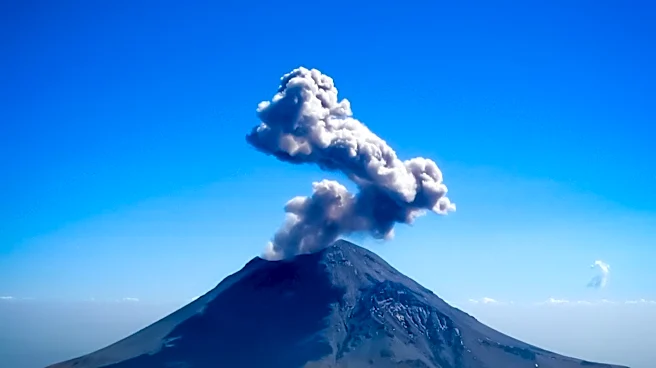
The Klyuchevskaya volcano in Kamchatka, Russia, recently erupted, releasing an ash plume that reached an altitude of 7 kilometers (approximately 4.3 miles) above sea level. This event occurred on August 30, as reported by the press service of the Main
Directorate of the Ministry of Emergency Situations of Russia in the Kamchatka Territory, citing data from the Kamchatka Volcanic Eruption Response Group (KVERT). The ash plume subsequently drifted east-northeast, heading towards the Bering Sea. The volcano, which stands at 4,750 meters (about 2.95 miles) high, has been under observation for ongoing activity. Earlier on August 18, KVERT had noted a collapse of a fragment from the Klyuchevskaya volcano's crater wall, leading to prolonged pyroclastic flows and a moderate eruption with a vapor-gas mixture containing low ash content.
Why It's Important?
Volcanic eruptions, particularly those that eject ash to significant altitudes, pose a substantial risk to aviation. Ash clouds can severely damage aircraft engines, reduce visibility, and disrupt flight paths, leading to diversions, delays, and potential safety hazards. The 'orange' aviation danger level assigned to Klyuchevsky volcano indicates a heightened threat to air travel in the region. While this specific event occurred in Russia, such volcanic activity can have broader implications for international air traffic, especially for flights traversing routes over or near the Bering Sea, which connects North America and Asia. Disruptions to these routes can impact global supply chains, travel schedules, and the operations of U.S. airlines and cargo carriers, potentially leading to economic losses and logistical challenges.
What's Next?
Following the ash discharge, the Kamchatka Volcanic Eruption Response Group (KVERT) will continue to monitor the Klyuchevskaya volcano's activity closely. The 'orange' aviation danger level will remain in effect, signaling to pilots and air traffic control that flights in the vicinity should exercise extreme caution or be rerouted. Further ash emissions or changes in eruptive behavior could lead to an escalation or de-escalation of this alert level. Airlines operating in the region will likely adjust their flight plans to avoid the ash plume's trajectory, prioritizing passenger and crew safety. The long-term impact will depend on the volcano's continued activity, with potential for ongoing disruptions to air travel if significant eruptions persist.
Beyond the Headlines
The recurring volcanic activity in Kamchatka, a region known for its numerous active volcanoes, highlights the constant geological forces shaping our planet and their potential to impact human activities. Beyond immediate aviation concerns, sustained volcanic eruptions can influence regional climate patterns by releasing aerosols and gases into the atmosphere. While the current event's ash plume is heading towards the Bering Sea, larger or more prolonged eruptions could have broader environmental consequences. The monitoring efforts by KVERT are crucial for understanding these natural phenomena and mitigating their risks, underscoring the importance of international scientific collaboration in tracking and responding to geological hazards that transcend national borders.