






What's Happening?
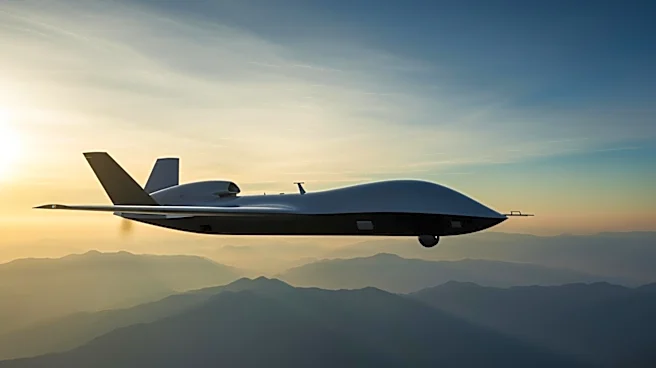
The U.S. Army is preparing to begin flight tests for its new High Accuracy Detection and Exploitation System (HADES) spy plane this summer, with the first units expected to receive deliveries later this year. This development follows a $1 billion contract
awarded to Sierra Nevada Corporation to convert the Bombardier 6500 business jet into a sophisticated intelligence, surveillance, and reconnaissance (ISR) platform. The HADES system is designed to replace the Army's older turboprop fleet, offering enhanced range and capabilities. According to Andrew Evans, the director of strategy and transformation in the Army's headquarters intelligence office, the HADES platform will feature an evolving sensor strategy to adapt to changing threats. The Army plans to deliver three prototypes, each with increasing capabilities, starting with legacy sensors and advancing to include more sophisticated radar systems.
Why It's Important?
The introduction of the HADES spy plane represents a significant advancement in the U.S. Army's ISR capabilities, crucial for maintaining a strategic advantage in modern warfare. By replacing older aircraft with a more versatile and technologically advanced platform, the Army aims to improve its ability to detect and respond to threats over greater distances. This initiative aligns with the Army's Continuous Transformation acquisition model, which emphasizes adaptability and responsiveness to evolving security challenges. The HADES system's iterative development approach ensures that it remains relevant and effective against dynamic threats, providing the Army with a flexible tool to enhance national security.
What's Next?
As the HADES program progresses, the Army will conduct service contracts and demonstrations to evaluate the system's capabilities and gather feedback from soldiers. This feedback will inform further development and refinement of the platform. The Army's focus on adaptability suggests that the HADES system will continue to evolve, incorporating new technologies and capabilities as they become available. The successful deployment of HADES could influence future military procurement strategies, emphasizing the importance of flexibility and rapid adaptation in defense technology.