


What's Happening?
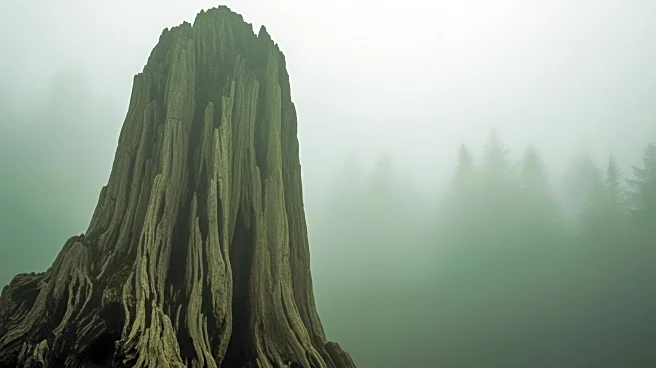
Researchers have identified Prototaxites fossils as a previously unknown, now-extinct eukaryotic lineage, distinct from fungi and other known groups. These fossils, first discovered in the 19th century, have long puzzled scientists due to their column-like
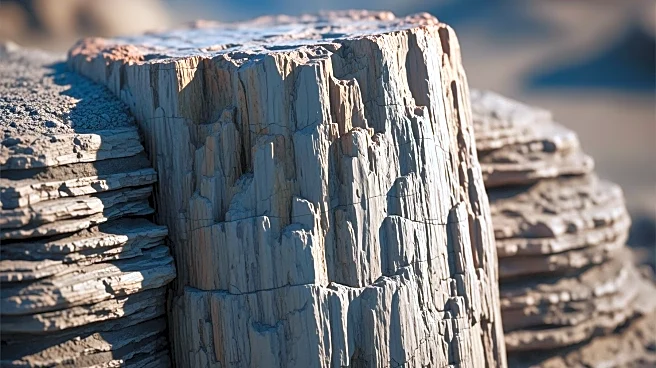
structures that could reach up to 8 meters in height. The study, conducted on a specimen found in Rhynie Chert, Scotland, utilized lasers and 3D imaging to reveal key differences from other fossilized remains. The findings suggest that Prototaxites were not fungi, as previously hypothesized, but rather belonged to an entirely new order of life. This discovery challenges previous assumptions and provides new insights into the diversity of ancient life forms.
Why It's Important?
The identification of Prototaxites as a new eukaryotic lineage is significant as it expands our understanding of the tree of life and the diversity of ancient organisms. This discovery could reshape scientific perspectives on evolutionary biology and the history of life on Earth. By revealing a new order of life, the study highlights the complexity and variety of prehistoric ecosystems. This finding may also prompt further research into other mysterious fossils, potentially leading to more groundbreaking discoveries in paleontology and evolutionary studies.